Search This Blog

Sunday, 15 November 2015

A Few Thoughts about Religion, Faith and Treating Fellows With Love

I originally posted this as part of a Facebook comment on a friend's post, who believed that all religion was wrong and was the cause of the present violence. 
I probably wouldn't go that far. But I have some experiences of a kind of extremism in my own life that I recognised and rejected. People ask me why terrorists make me sad, instead of angry. They're a little bit surprised when I say I understand the kind of thinking and teaching that creates them. I feel sorry for them, for the people and teaching they've been surrounded with their entire life. I feel sorry that they've dedicated their life on the basis of a lot of lies they were told, that basing decisions on religion, not humanity, would make their lives and world better in the long term. I'm going to call out a lot of behaviour, not just violence. So if you consider yourself a devout anything, be warned: this post is about you.
I don't have a problem with religion. I especially don't have a problem with faith. It can be great thing and has inspired many people to great art and actions. What really becomes a problem is that part of a which religion encourages you to involve other people around you. That's what should really stop. When you are basing actions not on what you think would be good for people around you, but instead on what you think are the wishes of some otherworldly entity you cannot produce or define clearly, that is a problem.
Let me highlight this with a more personal experience. Years ago i considered myself a devout Christian. I was married and we had a lot of support and friends in churches whereever we lived. I would have considered these people loving and peaceful.
When that marriage fell apart - due to my actions, I accept. Decisions made as a reaction to lots of other stuff that was wrong in that relationship - I only received messages of hate, judgement and unsupport (if that's a word - whatever the opposite of support is, that's what I experienced). The "friends" that I believed I had vanished overnight. That religion taught me one thing - if you don't tow the line of the group wishes of our community, you're on your own.
I walked away from my religion and my faith because I saw two things. Firstly, it was encouraging people to act based on what they thought God wanted them to do. This wasn't their own instinct. Vague religious texts and partisan preaching taught us to second guess our own reactions. This is how to turn a good person into a monster. You put aside your own feelings and thoughts and act according to a kind of "second personality." That makes it easy to justify extremism. When you're overcoming your own misgivings and acting according to someone else's wishes, it becomes duty. You think you're growing brave, devout, pious. In actual fact you're betraying everything that made you a good person: your conscience and responsibility to fellow humans. What did my old friends care if my marriage was over? It shouldn't have affected theirs (Unless, I suppose, it highlighted failings in their own relationships they weren't prepared to tackle.) They were acting out and quoting bible passages because they felt a responsibility on themselves to react in a certain way. not with love, but with law.
It didn't bring me closer to god. It changed me and drove me away from "faith" for good. It highlighted a second factor for me. I saw that I too had been capable and culpable of basing my decisions on an undefinable set of rules to which I felt I needed to adhere. I would say that I only got married at 20 in the first place because of religious teaching. I would also stay I only stayed in that marriage for as long as I did, despite the misery that relationship caused us both, because I felt my religion called me to stay in it. Those weren't common sense behaviours.
So I guess what I'm saying is, blowing people up or shooting them is part of the same behaviour as picketing abortion clinics, sending hate mail or even being judgemental about other people's life choices. You aren't helping anyone by telling them they're living their life wrong and should do it according to a set of rules you think are correct. If you're acting towards strangers in a way that is uncaring and that you wouldn't apply to your friends and family, that's bad; that's hypocrisy. Alternatively, if you would treat your friends your family that way, what the hell is wrong with you?
In summary, faith is fine as long as it brings you comfort, support and strength. As soon as it becomes something you need to apply to other people, it generally brings hate, pain and worse.
So yeah. Be free to believe whatever you like. But whether it's in violence, or just the day to day application of your views to other peoples lives: feel free to keep it to yourself.

Thursday, 29 October 2015

New Audio Drama Series Announced for Chaos Reborn

The Radio Theatre Workshop has announced a partnership with Snapshot Games to create a range of new full-cast audio dramas, based on the fantasy combat game Chaos Reborn. The first releases are planned for early 2015. The new series of audio adventures will explore the diverse environments and characters and provide an experience which complements the game.

Former producer of Escape Velocity and director of the acclaimed Elite: Dangerous audiobooks Christopher Jarvis said, “We're massive fans of Julian Gollop's game and it's amazing to work alongside the developers, because we get access to all the art and sound effects, which enable us to create something really faithful. This will mean that fans of the Chaos Reborn game can keep enjoying the experience even when they're away from their PCs.”

SnapshotGames CEO Julian Gollop said, “The prospect of high quality audio drama based in the universe of Chaos Reborn is tremendously exciting. Exploring the universe of Chaos Reborn through drama will greatly enrich players' experience of the game.”

The next step for the series is to secure costs for actors and production and The Radio Theatre Workshop has a crowdfund project here.

Christopher Jarvis said, “It isn't just for the gamers. They'll enjoy hearing the game world expanded with great actors and exciting stories, while audio drama fans will get a wholly untapped fantasy setting to explore. It has everything: giants, unicorns, magic trees, dragons, goblins, vampires and, of course, battling wizards. Bringing that all together is an amazing challenge and a privilege.”

About Snapshot Games: Snapshot Games was founded in 2013 by Julian Gollop (XCOM/UFO, Laser Squad, Rebelstar, Ghost Recon, Shadow Wars) and David Kaye (Achaea, Gaming Insiders), to  develop video games in the tradition of Julian Gollop’s earlier titles with modern, high quality presentation and multiplayer and social features. The company’s first title is Chaos Reborn, a sequel to the classic Chaos game first published in 1985. It was successfully funded via Kickstarter in April 2014. www.snapshotgames.com

About The Radio Theatre Workshop: The Radio Theatre Workshop was founded in 2013 by Christopher Jarvis as an end-to-end production studio for audio drama and audiobooks, specialising in full sound effects treatment and musical score. Their flagship podcast serial  Escape Velocity became a huge hit with gamers and audio fans alike and the RTW have gone on to receive critical acclaim for a range of official Elite: Dangerous audiobooks. www.radiotheatreworkshop.com

Top 5 Tips for Enjoying Zelda Triforce Heroes (and why it isn't like a threesome)


I've been enjoying The Legend of Zelda: Triforce Heroes on the Nintendo 3DS for about a week. I've mostly been playing online with strangers, since between running my Kickstarter for Full-Cast Audio Drama based on Chaos Reborn and looking after my daughter, one or two quick dungeon raids every couple of hours is the best I can fit in.

The Legend of Zelda: Triforce Heroes is a game which takes some of the basic puzzles from The Legend of Zelda series and splits the tools for completion between three players. A co-op game, it requires teams to work together by combining skills, picking up each others' avatars to for a totem and communication using only 8 simple emoticons.

Communication Panel
The Legend of Zelda: Triforce Heroes - Communication Panel
I've had some good games and I've had some bad games. It strikes me that the best way to make Triforce Heroes a great experience starts with looking at your own behaviour. What should we called this Zelda etiquette? I wanted something snappy, like "Tri-fiquette", but that's terrible. I thought maybe Etiqulink", but I'm not sure it's even pronounceable. I'm settling with "Zeldiquette." Zeldiquette, as a phrase describing good behaviour in Triforce Heroes is only irksome to me for the same reason as my irritation at this game being called "The Legend of Zelda." ZELDA IS NOT EVEN IN IT!

That aside, here are my 5 tips for good Zeldiquette.

Good Zeldiquette


5. Veiled Communication is Actually Part of the Game


I've read a lot of reviews of The Legend of Zelda: Triforce Heroes which completely miss the point. Take this quote from Arcade Sushi
Really this game is only held back by limited communication options when playing with strangers. 
Limited communication is at the heart of this game. Have you ever played charades and thought, "well, it's a good game, but surely it would be better if the players spoke"? Nope. If there were voice or text communication in Triforce Heroes then gameplay would boil down to more experienced players leading you through each level step-by-step. There's no fun in being told the solution. That's grinding.

One of the most interesting games of recent years was Journey. That did an exceptionally good job of matching you with random internet co-op buddies and giving you limited communication ability. Triforce Heroes is similar.

Screenshot - Guiding other players to a solution
Guiding other players to a solution
There's a lot of satisfaction in working it out for yourself, which is why the 8 emoticons available in each level are a good way of providing basic communication to work as a team, without robbing you of gameplay. There's a great feeling of accomplishment from figuring out a complex bit of a level together. It's just as fun if you know the solution and help guide your team to success using only the simplest of language tools.

4. Wheaton's Law Applies


In Triforce Heroes, you only get one chance to make a good impression.

Here's an equation:

  • We all want to try playing The Legend of Zelda: Triforce Heroes online with strangers at some point.
  • None of us wants to get matched with a pain in the ass.
  • The game makes it very easy to add players to a permanent blocklist.
The maths for that is very easy. If you behave rudely, every player you meet will block you on your first meeting. If that happens a lot, you're going to find yourself waiting in the lobby for connections for a very long time, because none of the regular players will want to play with you.

If you want to come across as friendly, remember to wave hello at your new team-mates when they join. No-one knows what to make of a player who stays silent, throws you at the starting Triforce and yells "Let's Go!" over and over.

Screenshot - Using the emoticons to celebrate success and good effort
Using the emoticons to celebrate success and good effort

3. It's The Opposite of a Threesome


I've heard lots of jokes on Facebook and other places about Triforce Heroes and threesomes. It's a fun gag for gamers who don't want to admit how attracted they are to each other. But there is a big difference between this game and a menage-a-trois and that is: the person in the middle is having the least fun.

However you organise a sexual threesome, the person in the middle is generally having the best time. But, when you form a three person totem in Triforce Heroes, spare a thought for the player in the middle. They don't get to use movement controls or items. They are willing passengers until such a time as the three-story target has been hit.

Screenshot - Forming a three-player totem to reach a high object
Forming a three-player totem to reach a high object

So, be nice. Everybody wants a chance to play. Being carried around a level by someone else is no fun. Put your co-op buddies down safely after they've helped with an objective.

2. There Can Be Multiple Solutions


I've done it myself. Another player and I are throwing icons at each other from opposite sides of a ravine, both yelling about how to reach the last balloon floating over the chasm.

The fact is, many of the puzzles in The Legend of Zelda: Triforce Heroes can be overcome in multiple ways, given the tools at hand. I may favour wearing the Big Bomb Outfit and blasting the hell out of anything that moves (including other players) but someone else might have worked out that the same target can be hit from a ledge a little way over.

Screenshot - Tackling a boss together
Tackling a boss together

So, rather that stubbornly following a tried and true path you know to work, why not listen to your fellow players and try what they are suggesting? Even if their approach doesn't work, it's much more enjoyable to try an idea and see the results than to have someone shout a solution over you, again and again. Unless it's against the timer, what do you really have to lose?

1. Above All, Be Patient


Good advice for all aspects of life, it's especially valuable when playing The Legend of Zelda: Triforce Heroes. If, like me, you're attempting your seventh run at Moblin Base to try and get a Sweet Shroom because for some reason your last few attempts have won you the Gohma's Eye six times in a row (the probability of which being a maddening 0.14%!). then it's fair to say you probably know the level pretty well.

Screenshot - Passing a active bomb between players
Passing a active bomb between players

Here's a thought: One of your online party might not know the level at all. This might be their first visit. Continually spamming the "NO!" icon and throwing them around the level isn't going to be the best gameplay for you or your new buddy. Given time, they'd probably even figure out the level on their own, so be patient, try to use the emoticons helpfully and give them space to work it out. Be extra patient if you're on a time-challenge map with someone who didn't vote for it - it's not the best way to experience a level first time.

Christopher Jarvis is a writer, audio drama producer and co-host on the LaveRadio.com podcast and is best known for creating the science fiction series Elite: Escape Velocity. He is an avid gamer and is currently running a Kickstarter for Full-Cast Audio Drama based on the game Chaos Reborn.


Monday, 22 April 2013

3DS Swapnote Special Stationery List - trying to complete

Okay so I know I don't blog very much on this channel anymore. I'm mostly taken up with my Newbie GM blog, all about my Doctor Who Roleplaying experiences and Lave Radio, the Elite: Dangerous Podcast as well as Escape Velocity the full-cast audio drama based on Elite: Dangerous.

But, I am still an avid gamer and a bunch of us have been trying to figure out our Swapnote Special Stationery list, especially since the Swapnote Update in April 2013 gave us the ability to see how many we had each collected.

I've search the internet a bunch of times, but I can't find a list of Swapnote Special Stationeries I can understand, so I thought I'd make my own, based on the ones I have on my system. Hopefully my 3DS pals can send me the ones I'm missing.

I have 52 pieces of Swapnote Special Stationery at the time of writing (now 63 - see updates at bottom). My list is:
  • Animal Crossing (insect outlines)
  • Animal Crossing (Japanese - border of character faces)
  • Art Academcy (Faint flowers in background)
  • Bravely Default Flying Fairy (Character with giant speech bubble)
  • Christmas Candy Cane, Baubles and falling stars
  • Christmas Gift Bow and falling flowers
  • Denpa RPG 2 (Japanese - Antenna Tower)
  • Denpa RPG 2 (Japanese - Denpa Men in conga line holding a green cloth?)
  • Denpa RPG 2 (Japanese - Family in fron of figure with bouquet)
  • Denpa RPG 2 (Japanese - Girl sitting in front of pile of presents)
  • Dillon's Rolling Western  (Faded paper poster)
  • Dillon's Rolling Western (Rope outline with silhouettes)
  • Dragon Quest Monsters (Japanese - Wood frame with vines)
  • Dragon Quest Monsters (Slime silhouetees)
  • Fallblox (2 columns of cartoon figures)
  • Fire Emblem (Japanese - Row of pixel sprite figures across bottom)
  • Fire Emblem Awakening (Character in front of faint world map)
  • General - Beach with surfer silhouette
  • General - Writing Paper/Pad with coloured lines
  • Harmoknight (floating musical notes)
  • I Fight Dragons (Photo booth faces with zooming figures)
  • Lego City Undercover (group of 5 crooks)
  • Lego City Undercover (police car)
  • Luigi's Mansion (Ghosts zooming down corridor)
  • Luigi's Mansion (side-scrolling ghosts)
  • Mario and Sonic (Tennis and Fencing)
  • Monster Hunter? (Cartoon Cat holding meat above head)
  • Monster Hunter? (Cartoon Cat holding sword in front of waves)
  • New Super Mario Bros 2 (Falling coins with gold mario and silver luigi)
  • New Super Mario Bros 2 (Gold mario with fireball, ALONE, with falling coins and coin stack)
  • New Super Mario Bros 2 (Luigi tripping with coins and Mario jumping)
  • New Super Mario Bros 2 (Raccoon mario flying with scrolling coins)
  • New Year Party Poppers with falling confetti
  • Nintendo Direct (Japanese - Super Mario Land 8-bi scene with pagoda)
  • Nintendo Direct (Nintendo Direct logo with Japanese pagoda with hills and fireworks, on blue stripe background)
  • Nintendo Direct (Red top+bottom borders with map of europe)
  • Nintendo Direct WiiU Black
  • Nintendo E3 2012 with zooming bubbles
  • Nintendogs and Cats (with reverse-zooming cloverleaves)
  • Paper Mario Sticker Star (Mario with hammer in front of yellow checked background)
  • Pokedex 3d Pro (Cartoon Genesect on white background)
  • Pokemon Black/White 2 (Genesect on blue/purple background)
  • Pokemon Black/White 2 (Genesect on grey background)
  • Pokemon Mystery Dungeon (3 blue circles)
  • Pokemon Mystery Dungeon (Blue)
  • Pokemon Mystery Dungeon (Red)
  • Swapnote Update (Flying letter with green baseline + pencil)
  • The Legend of Zelda (Vine border with 6 pixel-sprite figures)
  • Valentines (chocolate birds and falling flowers)
  • Valentines (frame with stitched hearts)
  • Valentines (Lace corners with zooming hearts)
  • WiiU (Faint Miiverse in background)
UPDATE!

Since posting this appeal to my 3DS buddies I have had an excellent response from the lovely Alana who has provided me with the following additional swapnote special stationery:
  • GameCenter CX (Japanese - Pixel art King on zooming starfield)
  • Pokemon Black/White 2 (paper in two halves, black border left, white right, black and white Kyurem depicted)
  • Super Mario 3D Land (Jumping mario with raccoon shadow on airmail border with logo)
  • Mario Tennis Open (Peach on right with tennis balls scrolling left to right)
  • Mario Tennis Open (Mario on left with tennis balls scrolling right to left)
  • Monster Hunter? (Cartoon Cat holding playing card? with duck on head and pink background)
  • Culdcept (Japanese - shows zooming rectangles with Manga girl in foreground, reads "Omiya Soft" in border)
UPDATE 2!

I also have the following stationery:
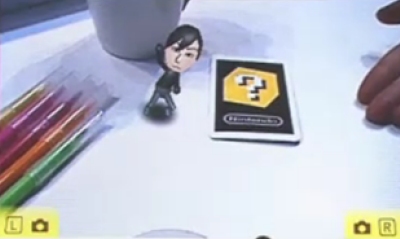
  • Super Mario AR Card
  • Mario and Donkey Kong - Minis on the Move
  • Animal Crossing (Isabelle with zooming leaves)
  • Monster Hunter 4 - Big English Logo and Silhouette Tribal Design

Wednesday, 16 May 2012

Gaming and Spirituality

I can't even remember the number of times I used to sit through long Church sermons wistfully imagining I was somewhere else playing a videogame.

This isn't quite that. But in taking a game with a chillout vibe and little excessive context of its own, Exeter Cathedral have experimented with using Flower as a visual and participatory aid to worship.

Whatever you believe in, I think its interesting how this game appears to create an focus for reflection and meditation, much like lighting a candle or listening to recorded natural sounds.

Thursday, 22 March 2012

GAME's administration: A gamer's view

I'd be lying if I said I was an expert in economics, but there are one or two things about the coverage of GAME's potential collapse which I - as a gamer and consumer - find it hard to accept. There's lots of talk about credit terms and competition with supermarkets - which is the downfall of so many high street retailers - but for me this doesn't cover GAME's failings.

Years ago there were two specialist high street retail chains: GAME and Electronics Boutique (since I'm digging out brain cells that have been dormant for a while, I think EB was Futurezone before that - that's going back a bit). GAME successfully bought out all of EB's stores, but never consolidated them, resulting in the current situation in which most major retail-oriented city centres have two branches of GAME. This must have meant a lot of staff and property overhead for little extra profit. Buying games isn't like wanting an overpriced coffee, you don't need to just turn your head and see a branch.

Some time later, a new chain emerged which specialised in the then-fledgling trade-in market, Gamestation. GAME decided to buy out the competition again, acquiring all of Gamestation's branches, many of which were - again - in cities which already had two branches of GAME. Additionally, by this time GAME had also adopted a major pre-owned strategy of their own and for most gamers, to be honest, GAME and Gamestation had become interchangeable.

It never made sense to me why GAME continued to maintain so much duplication on the high street. In many cities they effectively had three stores, often within a couple of streets of each other. I always though it was the perfect opportunity to compare which branch enjoyed the most footfall and conversion and to close the lesser locations.

The talk of supermarket's undercutting GAME is also confusing. As a gamer, I have to say that I find neither supermarkets or GAME to be a particularly competitive option. Play.com and Amazon pretty much set the standard best price for new game releases. GAME's best feature, for me, was the regular weekly deals and occasional discounts they would offer. There was always a good reason to visit GAME regularly and for me it simply wasn't the new releases.

Obviously the high street struggles to compete with online. What is particularly irritating about GAME's practices over the last few years is that they don't even compete with their own website. The same titles would regularly be £5-£10 cheaper on their website than in-store and local staff were powerless to price match. Perhaps the branches were having to pay for their multiple presence in the high street?

I think it would be a sad day for gamers in the UK if GAME and Gamestation disappear, leaving HMV left as the only struggling retail chain to specialise in entertainment products. For those towns with a decent independent game shop it will be a good season, but I fear many gamers will be left with only online options and for the casual gamer it will be a very confusing time.

Tuesday, 21 February 2012

Does the PS Vita add any value?

Today marks my last opportunity to pre-order Sony's new handheld console, the Playstation Vita. To be honest I'm still uncertain as to whether I want it or not. To get my own thoughts in order and to provide you with some food for thought, below is the summary of my current thinking. This is not consumer advice, nor is it an analysis of the specification of the console; this is purely my experiences as a buyer and as a gamer.

I have a lot of games systems. Currently vying for my attention are the Playstation 3, Nintendo Wii, Xbox 360 and Nintendo 3DS. Really I need to consider what the Vita offers that these do not.

Compared to the 3DS

On the one hand I love the 3DS as a portable games system. Poor battery life aside, the increase in power and resolution over the DS makes it a highly credible machine for more serious games. By "serious games" I mean bigger adventures, with deep stories and levels and cinematic presentation.

Having said that, the 3DS (as is often the case with Nintendo platforms) still lacks a generous quantity of these kinds of games. Ghost Recon: Shadow Wars (3DS) and The Legend of Zelda: Ocarina of Time (3DS) have been good examples of the kind of excellent games at which the system can excel. However, I still haven't caught up with Super Mario 3D Land or the new Resident Evil and around the corner is Rhythm Thief and the Emperor's Treasure and Heroes of Ruin, so I still have plenty of opportunity for decent adventure games on the 3DS handheld.

But with the PS Vita I wouldn't have to wait ages for good quality singleplayer adventures to appear. The PS Vita will allow for much the same kind of games as are released for the PS3. Uncharted, Killzone, Unit 13 - these are all the kinds of games that can and will make a regular appearance on the handheld. If I'm going on a trip and I want a single game to really involve me and keep me company, I know that with the Vita I will be able to walk into a shop and find something I fancy, whereas the 3DS library may possibly let me down. The 3DS is still unable to deliver comparable ports of big console titles, as is demonstrated by the Lego games. The 3DS versions tend to be upscaled from the DS, rather than downscaled from the Wii.

Online

Multiplayer is a possible issue. Multiplayer gaming on any Nintendo system is usually a horrible experience, and online is often not offered at all - except in a few excellent exceptions, such as Mario Kart 7 or Tetris 3D. The Vita will benefit from Sony's existing expertise with PSN and most of the Vita games look to be highly supportive of online multiplayer.

Having said that I don't really like multiplayer all that much. Shooters aren't really my thing, although I do love anything that offers online co-op. Ironically (apart from Uncharted 2) the most fun I have had online has been with Nintendo's Pokemon and Animal Crossing and also the Wii diving game Endless Ocean. I'm certainly not interested enough to fork out for a 3G Vita so I'm really only going to do multiplayer on my home wireless (where my PS3 and 360 are already located).

Backwards compatibility and watching movies

I did have a PSP once, until it was stolen. I still have cartridges of a few games which I dearly loved on the PSP and would love to play again, such as Metal Gear Ac!d 1 & 2. It disturbs me that the only way I will get to play these games is to pay to download them again from PSN, IF they ever become available. Sony are very bad at offering backwards compatibility because it cuts into their profits, hence why my PS2 is still connected to a TV in the house.

I liked my PSP at the time because I could transfer DVDs and music to it and use it as a portable movie player. At the time this made it a killer machine. I'm still hugely disappointed that Nintendo have not made good on their promise to bring full 3D movies to the 3DS in Europe. Times have moved on since the PSP, though, and now my phone now delivers all of the peripheral benefits the PSP once offered. Now the Vita must stand up as a games machine alone.

Remote and cross-platform play

The remote play feature looks interesting, but from what I have seen around this will be extremely limited. I love my PS3 games and I would love to be able to sit in bed and play them on the handheld. I think I would be more committed to the Vita if Sony sounded more like they were going to follow through on the promises of universal remote play.

It will also be good to be able to engage in multiplayer across the Vita and PS3 networks. Although, as with the remote play feature, it remains to be seen how extensive this will be in practice.

Conclusion

I really like the look of the PS Vita as a piece of kit and its ability to play great games without compromise to limited hardware. If I didn't have a PS3 or Xbox 360 I would definitely get one to use as a serious games machine.

But most of the games I would really enjoy are available in some form or another on the PS3 or Xbox 360. Sure I'd like to play the Vita Uncharted game, but I do already have three Uncharted games on my shelf. Is it worth paying over £200 for another one?


If you'd like to join the debate, feel free to post below or find me on Twitter as @holdmykidney.

Thursday, 10 November 2011

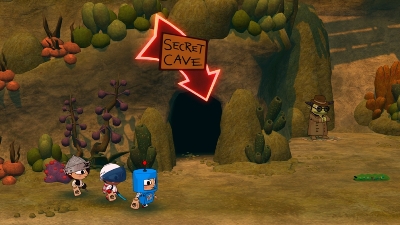
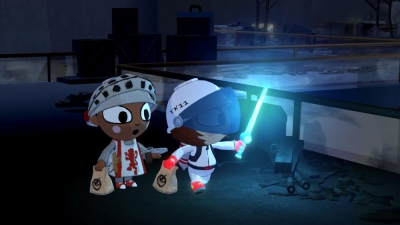
Novel Gamer commentary: Lashings of Ginger Beer / The Not-so-Famous Four do Hallowe'en

Sometimes the games I'm asked to review as Novel Gamer give me the opportunity for some real wish-fulfilment. Costume Quest was one such opportunity, reminding me as it did of the stories of youthful adventure I hungrily consumed as a child; stories which also, ultimately, inspired me to become a writer and teller of stories.

I had two major influences to which Costume Quest spoke. One was a lifetime love of the Peanuts strips writtem by Charles M. Schulz. I still find that Snoopy, Charlie Brown and the gang provide a wisdom and insight into the adult world which is remarkably accessible to young readers. Something about the humour and kinship in Costume Quest made me feel like I was in a Peanuts strip of my own.


The other influence was Enid Blyton's much-loved stories and in particular The Secret Seven and the Famous Five. The idea of child heroes taking on forces which were far beyond them and having to operate within the confines of an adult-ruled world rang true with Costume Quest's adventures.

However, it was the culture shock element of Costume Quest which really informed the story. Hallowe'en is not as big a festival in the UK as in the United States, although it is certainly popular. The strange contrast of being a Brit and playing such a celebration of Hallowe'en made me think of the clash between Peanut's world and the Famous Five and so I decided to write a story about some very old-fashioned British children being brought face-to-face with their American counterparts.

Ultimately, Costume Quest is a great game at any time of the year and I hope that the adventures I re-imagined in the Novel Gamer show are a fitting tribute, as well as an entertaining yarn. You can read the original story review and hear the podcast on GamePeople.

Thursday, 27 October 2011

Novel Gamer commentary: A gap year with poor communication / Rupert's Safari

The Novel Gamer column often falls into one of two different camps. Sometimes the stories are parallels, hardly recognisable for the game that inspired them until the reviewing point I was trying to make is revealed. On the other hand it can be viewed as a kind of fan fiction. Writing an experience within the game world from the perspective of the player's character. This fan fiction approach was definitely the best way I found to explore my review of Monster Hunter Tri (Wii).

This usually happens with games that a: I find flawed and b: games that take themselves too seriously. A game that is very self-knowing and open to poking fun at itself is hard to parody and if I like a game then the desire to poke fun isn't there.

The story I wrote about Monster Hunter Tri reflected my disappointment with the game. With glorious landscapes, mythical creatures and adventure, it was meant to be the perfect getaway - like an exotic holiday. It made me think of the disappointment often experienced when holidays do not meet our requirements. With the no-frills mucking-in approach of the player, combined with the trendy tribal tattoos, for some reason I found myself thinking of a well-heeled Brit on a gap year, searching the world for the best experiences. This was also added to by the instinctive middle-class distaste I felt for the process of killing animals for sport. And so, Rupert was born.

My frustration with the game was largely due to the incredibly frustration Wii Speak peripheral: a factor that, to this day, still continues to put me off playing the game. In testing the multiplayer aspect of Monster Hunter, I enlisted the help of my excellent gaming buddy The_Killa_Bunny. I should point out that while the section with Zara is based on our experiences together, The_Killa_Bunny is not at all like Zara and is much nicer!

I think this one is a very entertaining story in its own right, while still being a fair critique of the game. Certainly I think anybody who plays Monster Hunter will be able to recognise much of what takes place. The original story and podcast can be found at http://www.gamepeople.co.uk/novel_wii_monsterhuntertri.htm.

Wednesday, 19 October 2011

Novel Gamer commentary: Sex 'n' drugs 'n' Barrel-Rolls / Starfox Command Remembered

Starfox Command (DS) was where the Novel Gamer column began for me. I'd been talking with GamePeople about doing some writing for them. They review games from a number of perspective, including an "artistic" way which provides some great options for reflecting on a game.

With Starfox Comand, it wasn't so much the game itself I wanted to write about, but how I felt about it. It was a couple of years old by then, but the game was a classic - to me. I couldn't help but think that loads of people knew about the Starfox series but didn't appreciate how good Starfox Command actually was. So much so that I would actually say that it is the best Starfox game I have played.

I'm also really into music and it reminded me of the way a band with a long career often has albums from the distant past that have been overlooked in favour of glossy new compilations or an over-nostalgic reverence for the first release. It led me to thinking about telling Starfox Command's story as if Fox McCloud were an ageing rocker, being interviewed about past records in advance of a comeback tour.

The idea sat pretty well with me and I'm pleased to say that the opening episode of Novel Gamer almost perfectly crystallises everything I wanted to achieve with the show. The original story and podcast can be found at http://www.gamepeople.co.uk/novel_ds_starfoxcommand.htm

Thursday, 13 October 2011

Novel Gamer Season 1 commentary

I write for GamePeople.co.uk under the name Novel Gamer. The basic concept was: rather than write standard critical reviews, I would try and express my thoughts about the experience of the game, or the reaction the game caused for me.

The name also refers to the way the reviews are presented as short stories. Taking the form of an allegory, Novel Gamer opens up a unique view into the world of a game. Sometimes seen as fan fiction, other times seen as an absurdist view of gaming and occasionally striking real entertainment gold. The first series of Novel Gamer ran for 20 episodes with podcast readings of the stories recorded by myself.

Over the next few weeks I'd like to look back at these stories and revisit why I wrote them the way I did. More soon.

Tuesday, 9 August 2011

An appeal to right-minded people

I don't often use this blog for topics other than entertainment, but these London riots have shocked our country to the core, myself included.

I've sat and watched on the TV and via Facebook, Twitter, Youtube and chat rooms not only the events playing out, but also the responses of my friends, colleagues, associates and public figures.

I hear calls for the army to be deployed; for water cannons to be used; for curfews to be in place and enforced with lethal efficiency; even for an immediate return of National Service to drum a sense of order and responsibility (and also control) into the minds of our young people.

None of this does anything to address the roots of the problem. I'm certainly not saying that any of what has taken place is acceptible. Burning, looting, violence and robbery is totally abhorrent and needs to end, but few are considering what this is going to cost us all.

The sudden outbreak of rioting is caused by a fundamental disenfranchisement of everyday people in this country. In the upper classes this disenfranchisement manifests when the rich emigrate, or move all of their assets and taxes elsewhere. In the middle (and largely educated) classes, the sense of displacement and injustice can be seen in voting for extremist political groups, massive support for broadcase satire (which has become a platform lambasting every move any public figure makes) This should not be underestimated as it represents a general dissatisfaction with everything around us; in the poorest classes, and those with the poorest education, this disenfranchisement manifests in the only option available: lashing out at everything to hand and grabbing as much for one's self as possible.

What are the causes of this disenfranchisement? Abuse of power. Everytime a council ignores the pleas of local residents and builds an unwanted runway or windfarm. Every time an insurance company uses a technicality to deny a payment to a legitimate claimant. Every time a lawyer uses a loophole or procedural mistake to free a true criminal. Every time the government uses taxpayers money to fund illegal and unwarranted military action abroad to support our addiction to petrol, instead of using that money to find a credible domestic alternative. Every time a banker pushes the poor further into poverty through carelessness only to be rewarded with an annual bonus comprised of a sum of money the like of which most people will never see. Every time a big company with influence is granted permission to take action which damages our planet. Every time jobs are taken away from our own country and moved to cheaper economies elsewhere, only to sell the products back to us at an inflated price we can no longer afford.

All of these things chip away at our sense of hope; our sense of belonging and our sense of justice. People no longer believe that they can be heard by the world around them, inspite of the unparalleled access to communication we now enjoy. We can no longer pretend that the powers that be cannot hear us. They can hear us. They choose to ignore us because it is not in their vested interests to change.

But the response has to be something other than rioting. It simply has to.

When you use force, it has to be met with an equal or greater force in order to stop it and push it back. The authorities want to restore the status quo. By resorting to riots, the people involved are giving the authorities the excuse to use greater power. They are also causing enough outrage among thinking citizens to allow them to do this without complaint. I know several people who would not bat an eyelid if the police or military deployed tear gas and rubber bullets to disperse the crowds. We are affording the government the permission to take away our freedoms even further.

The responsibility lies with the rioters. For every building you burn, you endanger our freedoms. For every item you steal, you endanger our freedoms. For every rock you throw, you endanger our freedoms.

This has to stop, before we all become greater victims.

And to the governments, the leaders, the chairman and the shareholders - you have to understand that this outpouring of desperation says one thing and one thing alone. The people of this country are not happy with the way you are managing the direction of our home. These events are caused by the ever-widening gap between rich and poor and it is only the rich that have the power and resources to do anything about the situation.

Friday, 15 April 2011

Why be a hero? - Good Versus Evil

Over at Playfire, a social network site for gamers, they have an interesting take on trophies[1]. One thing that is clear with trophies is that the value of the trophy itself isn't a clear indicator of how difficult it is to gain. Some Bronze trophies are painfully hard to gain, while some Gold trophies are awarded simply for reaching the end of the game.

Playfire displays some interesting statistics about the prevalence of each game's trophy. For example, did you know that to date only 24% of players[2] have seen all the endings of Heavy Rain? Or that a massive 46% of players have the Platinum Trophy for Assassin's Creed II, meaning that they have bought all the upgrades, paintings and collected all of the stray feathers around Renaissance Italy?

Screencapture of Playfire Trophy statistics

I recently finished inFamous - a very good and often underrated 3rd person action game. It succeeds as a genuinely original superhero origin story where other games based on established comic book heros have failed. Cole's abilities are based around what makes a videogame fun, rather than trying to work out how to make a given hero's powers work. It's something that I hope the upcoming inFamous 2 delivers as well as this game.

One interesting aspect of inFamous is the once-ubiquitous moral choice system; which, in this case, translates into whether you play as a Hero, healing the sick and restraining criminals to face justice or a Villain, destroying baddies and citizen alike, destroying at will and sucking fallen victims' life forces to fuel your abilities. The only way to achieve the Platinum trophy in this game requires two play throughs. Once as a hero and once as a villain.

The first time I played this I made a choice: I really wanted to be the anti-hero. I'm a Live Role-Player and the idea of playing a character totally different to myself is always highly appealing. It occurs to me that in most games, even ones like GTA where you fill the shoes of a sort of anti-hero, you still end up taking mostly moral actions. I decided that, in playing inFamous, I wanted to be a proper villain. None of this "basically good at heart but makes wrong choices nonsense" - I decided that in my mind my character had been hurt, felt used and considered himself a victim and therefore lashes out at the world around him in order to inspire fear, if he can't win respect.

Evil Cole from inFAMOUS

I bore no conscience about civilians caught in the crossfire. If I ran low on energy I would grab a passer-by to drain them of their vital energy. If there was the chance to rob somebody for rewards, rather than help them and hope for reward, I'd do it. Outside of the game's own mechanic was space for some personal expression through role-playing: fallen enemies (particiularly if they'd put up a tough fight and annoyed me) would be drained of their energy regardless of whether I needed it - it became an expression of vengeance. Being the villain was empowering, but ultimately lonely; People throw stones at you in the street, forcing you to have to live your life on the rooftops of the city, and your loved ones turn further away from you. But, as a game-play experience it was genuinely liberating and different to how most games feel.

Playing as a Hero totally changed the experience of the game. I had to modify my battle technique to avoid hurting civilians. More than that, there were similar role-playing experiences to what I had enjoyed as a villain. If I saw a sick pedestrian in the street I simply couldn't pass them by, even if I was in the middle of a chase. If I saw an injured criminals, my instinct was to use Arc Restraint (kinda like handcuffs) to hold them down to prevent them hurting anyone else. The civilians of the city rallied to my cause and even joined in the fight, assisting me by hurling rocks at the enemy, rather than me.

All in all it gives a compelling insight into the psychology of a driven humanitarian/broken vigilante or, as we more commonly name them: superhero.

What's interesting about Playfire stats, is that the majority of players choose to be a good guy. 26% of Playfire players have the platinum trophy and have therefore played both sides of the coin, so we'll discount them from our analysis. 35% of the remaining players finished the game as a Hero, while only 18% chose to finish the journey as a Villain.

Good Cole healing a civilian in inFAMOUS

The most helpful stat is for the Karma Powers upgrades. There are 15 good or evil missions that must be completed to fully upgrade a power on either side; this is an exclusive arrangement - it's not possible to fully upgrade one particular "good" power if any opposing karma mission has been completed and vice-vera. 20% of players fully upgraded their Good powers, with only 8% of the players fully upgrading their evil powers.

So, less than a third of players who chose a full single path through the game chose to play as the bad guy. I'd like to believe that in real life, most people strive to do what they think is the right thing. People make mistakes, sure or are selfish or have misguided aims which cause what it right in one person's eyes to be wrong to others; but few people specifically aim to do the villainous thing. So, given the choice within a non-threatening environment like a game, why do so few gamers choose to explore boundaries by playing a proper anti-hero?

In "Why Dark Games are Good", Andy Robertson talks about "safe spaces for dark stories" in which he addresses the issue that there is nothing wrong with exploring darkness in an environment where it has no real impact. My own experience of playing as a villain in inFamous allowed me to explore some curiosity in my mind and feel liberated from game- and role-playing habits - but, more importantly I learned that ultimately the effect of seeking to improve, rather than destroy was far more rewarding. Playing violent or dark videogames doesn't turn you to violence - but it does and should provide a environment without real consequences to explore violence and bad choices and the impact that they have.

Perhaps it would do players some good to spend a little less time trying to be the hero and take the chance to learn why they don't want to be a villain.

1. Trophies and achievements, but I'm going to stick to the one term for this (back)
2. Based on users of playfire only - therefore probably tipped toward the more "hardcore" gamer (back)

Tuesday, 22 March 2011

Novel Gamer Episode Eight - Pilotwings Resort, or "Learning to fly"

This is the eighth episode of the popular online alternative review column "Novel Gamer", part of Game People, which specialises in real world, alternative and artistic reviews. Don't forget that a podcast is also available from the source of this article, here.

This week, awoken by a mysterious message on his computer screen, an invitation leads Geo to a waterside warehouse where he must ask himself: does the Matrix have him? Or is the truth about the other side of the screen far more incredible?

This weeks' Novel Gamer review is based on reactions to a pre-release launch experience of PilotWings and is a preview, than a review based on a full assessment of the game.
...Wake up Geo

That was what the monitor screen said. It's appearance, unbidden, on my display had woken me from my light slumber as I lay on my couch with my DS on my chest. The battery had obviously died some time before. I was so tired when I had been playing I actually had no idea what I had been doing or what progress I may have lost.

At least I thought the text on the screen had appeared. I could picture it, but now the screen was blank. I half remembered that actually that was the beginning of a movie, so maybe it hadn't happened at all?

I stumbled into the kitchen, drew a glass of water, tipped some cereal into a bowl and sat down. The milk looked okay and I'd only bought it a couple of days before, but I still unscrewed the cap and gave the contents a sniff, automatically. Some habits you just get used to.

That day -- more than any other day -- I was strangely aware of my senses. The floor, between the kitchen table and the fridge had a slightly tacky patch. Not actually sticky, but maybe a place where a spill had once happened and been cleaned up, leaving only the faintest of adhesive traces. One end of the room seemed slightly darker, as though perhaps the bulb on that side of the fitting was on its way out. Condensation had formed on the tap spout where the cold water had escaped its confines for the alternative comforts of my glass.

There could be any number of reasons for my heightened feelings on that day. But, the reason I prefer to cling to is because that was the day I was about to have my eyes opened to a new world.

I've always been a gamer. From my earliest memories I recall slipping into an alternative world of adventure and intrigue on the other side of the screen. For me games have always enabled me to lose myself in an alternative reality. Much more than film with its fixed view on the action and its set narrative. The only other route I have ever found as effective for escaping from this world is books. It's not for everyone, but for the confident reader the barrier of the ink on the page melts away and the words and ideas are transported directly into the brain; to fire the imagination and to create a witness eye view on events that are unique to the reader.

The problem with games has been the thing it shares with film: the screen. In spite of its ability to display incredible vistas, gravity-defying moves, heart-breaking empathy and deep intrigue, it is the screen that reminds us we are trapped. Trapped in a world of mundanity, tethered to practicality and shackled to domestic limitation.

The screen gives us window into a world that is more alive and that accepts fewer excuses for what "cannot be done" within the bounds of physical reality.

That day was the day a man came who took the barrier away and enabled me to soar in the skies, as I used to in my childhood dreams.


If I could not be sure that I had seen the cryptic movie pastiche on my monitor I was in little doubt as to the reality of the card that had been pushed through my door.

It was clearly meant to serve as a business- or calling-card; however, it's dimensions were more reminiscent of a playing card. That certainly grabbed my attention. It featured a simple "?" mark.

I turned the card over, half anticipating something from the world of literary cliché: the ace of spades maybe, or the Tarot figure of Death grinning up at me. Instead, the reverse of the card featured a simple typed message: a local address and a time.

Looking at my watch I saw that I had just enough time to get ready and get to this meeting. There could be no question of my not following this invitation. Not only was the "?" mark on the card reminiscent of the prize boxes in Super Mario, but I couldn't help but think that if I had slept any longer I would not have been able to make this appointment; I thought back to those ghostly words on my screen.

I walked down to the docks. The address I had been given was for a waterfront warehouse, next to a small cafe. I decided I had no time for a tea break and headed inside. I was too excited about the wonder of this invitation to delay.

In the centre of the room stood a tall, imposing man in a long, black, leather coat. Beside him on a table was what appeared to be a Nintendo DS.

"Welcome, Geo" the man intoned. "I am glad to meet you. I believe that you are a man with a problem. A problem I hope to solve."

I nodded my head, "you're talking about the games."

"I'm talking about the reality you create for yourself, Geo. You who have always loved the excitement of exploring other worlds and doing things that no person could hope to experience in reality but who always feels like you are kept on the outside. Are you ready to go deeper into the game?"

I frowned, trying to understand. "You're talking about increased immersion?"

He replied, quickly, "I'm talking about reality, Geo. What is real? If real is what you can feel, smell, taste and see, then 'real' is simply electrical signals interpreted by your brain. If you can convince your brain that an image you are seeing is in three dimensions -- 'appears' solid -- then who is to say it is not real?"

He held up his hand dramatically and I could see that he was holding a pair of old-style 3D glasses, with coloured lenses. "You have a choice," he announced, "look through the blue lens and you will see the world as it has always been, flat and dull ... ummm..." he faltered, "and looking a bit blue..."

I raised my eyes to the ceiling. The dramatic mood had been broken.

He continued unabated, "look through the red lens and you'll see, well, exactly the same thing." I think he sensed he was losing me, as he went on, hurriedly, "but if you look through both -- here's the thing -- it also changes nothing! What I am about to show you doesn't require glasses." He threw them over his shoulder and they landed in a puddle of water leaked from somewhere high in the ceiling.

He opened up the machine on the table. "This," he declared, "is the Nintendo 3DS and it will show you a world of which you have only dreamed." He stuck out a hand towards me, palm up, "the card, please."

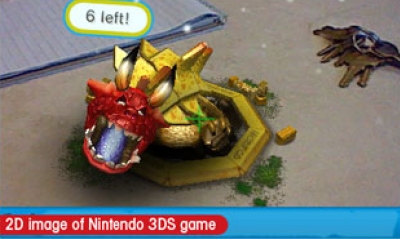
I reached into my pocket and recovered the calling-card that had been pushed through my door. As I placed the card down on the table, "?" mark facing up, he handed me the 3DS and I focused on the image of the card on the screen. It wasn't like looking through a camera lens. It was like seeing the table in front of me with fresh eyes. A 3D viewport onto the world as it is. Then the 3DS showed me the world as it could be: the card unfurled, revealing a deep recess in the table. A dragon head on a long neck extended out and toward me.


I was reeling, "but this is incredible!" I called out.

"Patience, Geo," he said, raising a hand "I agree this is impressive, but the dragon is only to demonstrate that the world is not necessarily as you see it. Let me show you what you are really here to see; what you really came to do..."

*****

I felt myself soaring high above the ground, floating over the sea and onward, ever toward my target. The clouds parted and I saw the world laid out before me. It was like the world, only at the same time not like it. It wasn't drab, grey and mundane -- this was a world inhabited by living colour as though the sea was trying to be as blue as it could be and the grass exerting itself to be the greenest grass the world had ever seen.

The world was so ... if I had to settle for a word, I'd have to go with 'real'. Not the kind of real I expected. It was not our world reproduced on the screen. If anything it was the reverse. It was as though the world of the games had been made solid and brought into our reality. Before, these places had always seemed like colourful sketches in some framed picture I could never enter. Now they lived and breathed in three dimensions and it was like seeing a cartoon hero come to life.

The flying itself was breathtaking. The ease with which I could soar through floating rings seemed to come naturally to my fingers and I glided over the beautiful island paradise and landed the aircraft gently on the waves exactly as I had been taught.

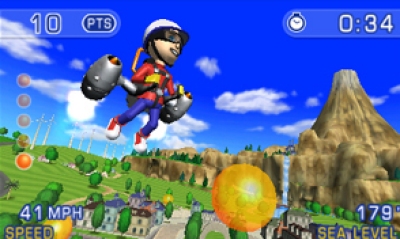
The dream changed and I found myself hanging in the sky, held aloft by a jetpack. It was a fun variation on the controls required by the plane and I propelled myself forward, through balloons onward towards the goal.


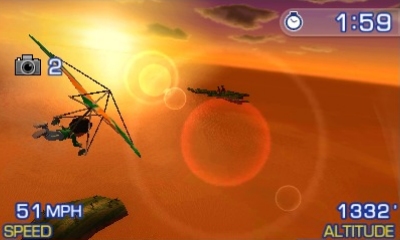
The dream changed once more -- now I was whooshing over the mountaintop, suspended from a hang-glider. The world was so deep and so intense and I wanted to explore every part of it, but I felt myself being pulled away.

I blinked and found myself back in the room with the stranger.

"How was it?" he asked me.

"I feel," I struggled to find the words, "I feel like I've held a world in my hands, a world that I can enter whenever I choose and fly over, under, through and across. I want to explore every inch of that world from my vantage point in the sky. It felt real. It was almost too deep. Sometimes I felt like the gulf of depth was too massive and I wanted it to feel a bit flatter... incredible."

I rubbed at my eyelids, "why do my eyes hurt?"

The figure looked at me poignantly, "because you've never used them before."

I made to pick up the Nintendo 3DS again. I desperately wanted to fly some more.

He stopped me. "That is all you can see for now. It is time for you to return home."

I was incredulous, "but I've just seen the most incredible things! I've seen the world of games as it could be and I'm not sure if I can return to the other side of the screen! I want to spend more time here and see more and fly more..."

He nodded, kindly, "the world you seek is coming soon, Geo. It is only a few short weeks away and you will be able to return to the real side of the screen again. For now, you must spread the word that others may be enlightened."

*****

My alarm clock beeped loudly and I awoke. I could hear the rain lashing against the glass.

I rubbed the sleep from my eyes and, in doing so, I remembered the adventure with the Nintendo 3DS. I remembered getting my pilot wings and soaring high above the ground.

I looked out of the window and could see blue sky breaking between the grey clouds. I had had the most incredible adventure, journeyed to a colourful world and flown... and then had it taken away before I was ready; before I had had a chance to see it all.

The memory felt like the aftertaste of a sweet dessert in my mouth. In my heart I knew I was desperate to fly again. It had all felt so real to me.

It couldn't have been a dream, could it?


Thursday, 17 March 2011

Novel Gamer Episode Seven - Starship Patrol, or "Commander on Trial"

This is the seventh episode of the popular online alternative review column "Novel Gamer", part of Game People, which specialises in real world, alternative and artistic reviews. Don't forget that a podcast is also available from the source of this article, here.

This week, a space fleet commander - on trial for competency - must justify his actions and approach to a controversial fleet battle, amid tales of weapons shortages and very basic video displays.

Across the stars, nestled between floating chunks of space rock and debris, the Space Station Zenobia drifted along in its quiet orbit between the planetary mass hundreds of miles below and the nearby moon.

Commander Jayston stood up from his seat in the congregational chamber and placed his hands on the wooden bar of the dock. He faced the panel of senior officers before him and awaited their instruction.

Admiral Langford eyed him impatiently, as if unaware that the assembled court was waiting upon his word to commence. His head was slightly bowed and he frowned as he stared at Jayston through thick white eyebrows. He opened wide a thin pair of cracked, wrinkled lips to reveal a small row of yellowed, gravestone teeth and barked commands.

"Well, man? The oath! Get on with it."

Commander Jayston raised his hand in the air. "I swear that my testimony shall be the truth, the whole truth and nothing but the truth."

The Admiral clicked his tongue in acknowledgement and straightened up, eyeing the assembled crowd. "In that case," he declaimed, "I declare this initial meeting of the military competency hearing panel open."

He locked eyes with Commander Jayston once more, "you understand that the purpose of this hearing is to hear a full account of your version of the events that took place on the outer rim during your campaign?"

Jayston replied, "yes, sir."

The old man continued, almost without waiting for the response "and you understand that this hearing is not questioning the outcome of that campaign - generally considered to be quite satisfactory - but rather to establish the efficacy of your conduct and approach in its execution? There are a number of areas in which your performance has been called into question, on the basis of the official logs, recordings and witness testimony."

"Yes, sir."

Another officer to the Admiral's right, whose name plaque declared him to be Admiral Bryant, spoke up. "Perhaps, Commander, you could begin by telling us how the conflict started?"

"We set out to perform a routine survey of an alien system, but were set upon at every turn. Nevertheless our orders were to proceed with the mission." Jayston replied.

Admiral Langford curled his lip. "I see," he growled, menacingly, "and that brings us to the first of your engagements with the enemy. Can you explain to us, Commander, exactly why you went into your first battle with the enemy entirely un-armed?"

"Well, sir," Jayston stammered, "The ships had been built with a number of standard mounting-ports to which weaponry could be assembled at short notice -- however due to the available resources we did not have any standing defences."

The panel murmured and shared glances between themselves. "So what did you do when the first enemy craft began attacking?"

"We generally have enough resource budget for two slow-repeating lasers or one missile silo depending on circumstance. Owing to our tactical systems we were able to predict the flight path of each enemy wave. We placed the weapons such as we had in what I felt to be the optimum position to handle each encounter. As the enemy fell, we recovered what resources we could from these craft and converted them into additional weapons as the exchange continued."

"And this is standard practice, is it?" Admiral Langford enquired.

Commander Jayston nodded, curtly, "in these kinds of engagements, I believe it to be a common type of defensive strategy."

"So," Admiral Langford cut in, "you faced the enemy with your fleet, based upon a hand-to-mouth strategy whereby the resources generated by one defeated wave would feed into your defences for further attacks?"

The defendant nodded once more, trying to anticipate the Admiral's next barbed comment as accurately as his ship was able to determine an enemy's flight path.

The Admiral leant back languorously in his chair and cast a hand theatrically around the assembled room. "Am I the only person present who feels it would be a more appropriate strategy to meet the enemy with a properly prepared and equipped defence grid? Rather than deploying weapons one at a time to meet specific engagements?" His voice rose dramatically in line with the hyperbole.

"But, Admiral," Commander Jayston protested, "we really only had enough budget to deploy two weapons!..."

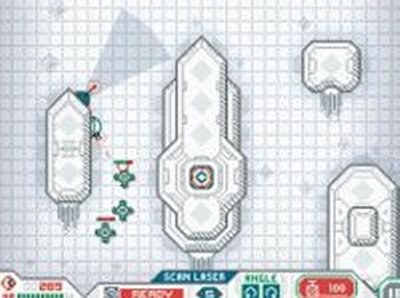
Exhibit A: The tactical display of the battle

There was a general murmuring in the court which had to be quietened by the officer on the other end of the panel, another Admiral by the name of Bellingham.

Admiral Langford himself leaned toward Jayston and smiled sweetly. It reminded Jayston of the way a crocodile looks as it glides effortlessly through the water. He gulped, involuntarily.

"That budgetary issue being the case, Commander," the Admiral said, at last, breaking the tension, "with what defences did you begin the second engagement?"

Jayston chewed on his lip, "ummm, none, sir."

Langford put on a faux expression of confusion, "but by the end of the first battle you must have amassed quite a sizeable arsenal?" Why was this not re-deployed when the enemy attacked a second time?"

Silence fell heavily upon the room, awaiting Jayston's answer. He finally said, simply, "I don't know, sir."

The Admiral pursued him, "I cannot think of a good reason why the resources available to your fleet should not be made available in subsequent battles. Can you?"
Commander Jayston simply shook his head.

The three admirals behind the long counter exchanged glances with one another and then bowed their heads to make notes, almost in unison.

Admiral Bellingham spoke next, "Commander, perhaps we could move on to the issue of your performance in the individual skirmishes. This appears to be a very mixed area. In some battles you display an exemplary performance -- occasionally leaving the enemy without a single remaining unit -- while in other battles you barely escape with your fleet intact. Do you have an explanation for this fluctuation in your abilities?"

"Yes, sir, I do," Commander Jayston replied hopefully, "I believe that the primary responsibility for our variable success with the enemy must lie solely at the feet of our Research and Development department."

This prompted an explosion of coughing and outraged bluster from Admiral Langford. "What?" he demanded, "you blame the weapons development team for this? Explain yourself!"

"Certainly, sir," Jayston replied, "throughout the campaign, R&D occasionally provided new weapons based on their work and the alien encounters. However, the enemy demonstrated time and time again that they were capable of deploying cloaked ships which were impervious to all but a minority of our weapons. In spite of the effectiveness of these enemy units and the problems which they caused us in our defence, R&D failed to provide any weaponry which was effective against these craft. In desperation I had to form my own approach -- while the mine layers are generally ineffective they do cause the enemy ships to de-cloak at which point better weapons could be brought to bear. However the effectiveness of mines is unpredictable and results are largely random. Sir."

Admiral Langford had an expression on his face which looked as though he were trying to remove stuck gum from the roof of his mouth. "I see," he eventually replied.

Bellingham chipped in, "but it's not all down to the weapons, is it? Some of the targeting is off! Why we have pictures here which show your most effective weapons firing upon lone, weak targets while elsewhere three heavily armed fighters attack your ship!"

Commander Jayston retorted, quickly, "I have very little control over the targeting, sir. All I can specify is an area in which the guns will fire. They choose their own targets -- very poorly if I may say so, sir."

"And to what," Langford said, slowly, "do you attribute this failure?"
Jayston thought for a moment, carefully -- he didn't want to dig himself further into a hole but he didn't feel he could go any longer without raising this particular issue. "I think the fault is the graphics display, sir."

The admirals raised a line of eyebrows, almost as if choreographed.

"The tactical display looks like.. like.." he struggled for the right words, "well sir it looks like it's been hand drawn on lined paper! It's hardly representative of a real battle, is it? Umm, Sir."

Admiral Bryant asked him, "what would you prefer?"

The young Commander was a little taken aback by this question, "well Sir... I ... ummm... think it would be more effective, given the setting, to be presented with a realistic camera display of the ships involved in battle."

Langford picked up his colleagues line of questioning. "Commander, what colour is space?"

"Black, sir."

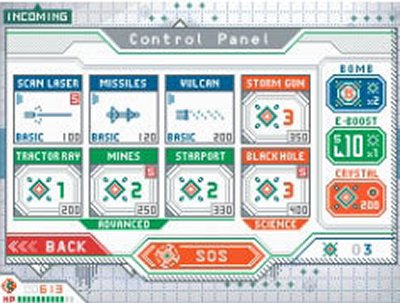
Exhibit B: Weapons often available by the end stages of a battle

"And are most of the enemy ships a brilliant white, or a different colour?"

"Umm mostly darker colours than white, sir."

"And the projectiles and resources involved -- are they dark or light colours, in reality?"

Jayston's heart felt like it was plummeting through depths to rest at the bottom of a deep lake. "They are dark colours, sir."

Admiral Bellingham said, "whereas the graphical display for your fleet's command console displays the enemy on white screens with clear black outlines and makes all resources and projectiles very clear."

The Commander chose to not respond to this statement.

"Do you still feel that the display style is at fault, Commander?" Langford asked him, bluntly.

"No sir." Jayston replied. What else could he say? He watched dust particles dance in the rays of light coming through the viewports behind the panel. Was this to be the end of his career?

The three admirals adjourned to a private room to discuss the facts. It seemed to Jayston as though there was no hope.

The waiting seemed eternal, although in actuality less than five minutes had passed. The ante-room door opened and the three stooped, elderly soldiers filed back into the room.
Admiral Langford looked intently into Jayston eyes. "Having looked at the records of your performance and the overall outcome of the campaign -- as well as other mitigating factors -- we find no grounds on which to bring charges of misconduct or competency. You are free to leave."

Jayston was stunned; but at the same time he was suddenly curious. "If I may ask, sir... what other mitigating factors?"

The panel simply stared at him and offered no response.

Moments earlier, the panel of three judges had congregated in the ante-room behind the congregational chamber. They exchanged glances.

"Well," Bryant was the first to speak, "what do you think of it all?"

Langford growled, "I don't like him. Starting a battle with no defences, refusing to redeploy weapons once they are positioned...."

Bryant cut in, "his records indicate that he found the budgetary cost of removing a weapon once it was installed was prohibitive to making any changes. His complaint about this is noted in his report."

There was a moment where nobody spoke -- just thought about how to pass judgement on this episode.

Admiral Bellingham cleared his throat, softly and with a conspiratorial tone, suggested "we could of course look at this from a sideways perspective. Due to the way in which Jayston's fleet is housed he can be called upon at a moment's notice -- rather than some other war games which require us to find the appropriate records and install them. Also, this whole incident hasn't cost very much."

"Cost?" Langford demanded, "what do you mean?"

"Well," Bellingham continued, "according to our records this whole affair has only cost our department 500 DS Points."

Langford and Bryant looked at each other and raised an eyebrow. "We should probably overlook a few indiscretions, then?" Bryant offered.

Admiral Langford nodded gravely, "I think," he announced with an air of pontification, "that that is exactly what we should do."

Monday, 7 March 2011

Novel Gamer Episode Six - Pokemon, or "Gotta Catch Em All - An Expose"

This is the sixth episode of the popular online alternative review column "Novel Gamer", part of Game People, which specialises in real world, alternative and artistic reviews. Don't forget that a podcast is also available from the source of this article, here.

This week, a reporter goes undercover to witness street gangs, organised animal fights and capture of wild Pokemon but discovers more than just a world of competition and collection.

I'm an undercover journalist for the Evening Bugle and I've spent the last month infiltrating the young street gangs of this country. I've been attempting to gain better understanding of a subculture with its its own rules and obsessions; a competitive world of fighting, acquisition and rites of passage often not understood by their parents' generation.

To give you a better insight into this incredible world, I would like to being by telling you about the day I attended a meeting of gang members; the day I attending alongside a Police bust.

Sergeant Bill Oak knows the streets around this town well and as we drive to the address we've been given for an illegal underground fight, he talked me through the neighbourhood and it's history.

"It's been around for years, this kind of thing," he explains, "I think it started in Japan and it was a pretty huge thing over there. After that we started to see it more and more over here. Collectors, trainers, fighters -- everybody seemed to want a piece of the action and they found it a rich ground to cultivate... uh.." he stopped talking and looked ahead, squinting into the dawn sun. He spoke to the driver, "turn here."

Reaching down, he grabbed his lapel mic and barked rapid orders to the officers in the other cars. "We're here, let's get ready to move. I want Stewart and Briggs to cover the rear fire exit and pick up anyone who tries to make a run for it; everyone else with me."

Sergeant Oak turned to look at me, "we need to be ready to move quick, are you ready?"

I felt a bit cold. By now I'd become accustomed to moving among these gangs as an accepted part of their society. To arrive now on the end of a battering ram come to smash open their door -- I felt suddenly aware of the conflict. I nodded to Oak and we moved towards the building.

The courtyard between the abandoned brick warehouses were a reminder of the town's industrial past -- underfoot the crack of shattered pieces of broken, bottle-green glass broke the silence.

We entered the building with Sergeant Oak in the lead, immediately followed by five other officers and then finally myself. As we came in we could hear the excited shouts of a crowd around an animal fight in progress. Above the din, we could hear the plaintive cries of the combatants themselves. Creatures locked in a deadly mortal battle while their owners and trainers made bets and goaded on the action.

"This is the police!" Sergeant Oak's declaration of our presence cut through the scene like a crack of thunder.

There was a mix of reactions in the room. Some made an instinctive bolt for the fire exit, while others stood dumbfounded, waiting to be rounded up by the officers.

In the centre of the dark hall was the ring, in which lay the panting forms of two small creatures. Without their trainers to urge them on they no longer fought; they simply lay passive. A small panda-like creature whimpered in one corner, with evidence of burns and cuts to its fur clear to all onlookers. Hulking in the other corner was some breed of pig, with small flames and smoke issuing from its mouth.

This then, was the calling of the "trainers"- the self-appointed owners of these creatures called Pokemon and the orchestrators of this battle between animals.


A month earlier I had been introduced to the leader of one of these gangs: a young man known as Ash. Ash is of no fixed abode and spends much of his time travelling around the country. He seems comfortable in his camp and his collection of Pokemon scampered around him. He plays with them -- quite kindly, it seems to me -- and laughs as they scamper around.

At the time I remember thinking that this image of a young man enjoying his pets was not in keeping with the picture I had been painted of hardened street-fighters and dealers.

I began by asking him why he spends his days travelling away from home.

"Everyone in my town has the same Pokes," he says, "from what I hear it's same all over. Different towns have people with different Pokes -- but there tends to be like, y'know, groups of Pokemon in those towns, you get me? If you wants to find the best and the rarest ones, they're out in the country. Also, for a guy like me, I want to train my Pokes against the Pokes of other trainers, you get me? Like me, they all out travelling. No use sitting still."

I asked him why they all do it and what it is that drives them. Why does he do it?

"For me," he begins, a look of determination on his face, "I want to be the very best. Like no-one ever was, you get me?"

He explained to me that every young person that goes on this journey is looking to create the most diverse and complete collection and to demonstrate their skill in raising the Pokemon to a properly trained level. The members of these Pokemon gangs aim to be "Masters", a title they seemingly apply to themselves when they feel they have suitably proved themselves among their peers.

"'Dis journey I'm on," he continues, thoughtfully, "it's like it was made for me. I travel 'round and everything seems to fall into place. Even though people have been training Pokes for years, yeah?, new people are still coming to it. This new route I'm taking, even the new trainers are finding it perfect to get to grips with catching and training. It's a great time to be a trainer."

I spent some time travelling with Ash, to really understand what it is that he spends his time doing. When he found a Pokemon he wanted, I have to admit that I was a little shocked. The creature was exhibiting ferocious behaviour towards us as we walked through the long grass and I felt sure it would attack.

Ash's reaction was very different to my own flight response. He sent one of his existing Pokemon toward the wild creature and began issuing instructions.

The fight was brutal at times; the wild creature lashed out with poison, claws... even kicking sand in the eye's of Ash's prize pet. Eventually, however, the evidence of Ash's detailed tutorship of his Pokemon came to the fore and the wild creature was beaten into an exhausted submission.

"Whoa, that battle was well sick!" Ash declared as he deployed his 'ball,' a snare used by Pokemon Trainers to capture creatures and leave on it an imperceptible mark of ownership. Soon the creature was caught and in Ash's possession.

I had not expected his next actions to be what they were. We rushed to the nearest veterinary clinic and Ash insisted that we could not leave to continue our journey until his new Pokemon was restored to full health.

What surprised me most was not only the joy with which Ash received his fully healed Pokemon back into his care, but the excitement and happiness which the captured Pokemon seemed to hold for Ash. Even though this creature had seemingly fought to be free -- to within an inch of its own life -- you would now never know that these two had ever been anything but firm friends.

Watching Ash take care of his new charge and choose a name for it I began to understand the appeal these creatures hold for the self-appointed Masters that capture and train them. There is a mutual dependency and benefit between Trainer and Pokemon. In an increasingly isolated and fragmented society, these young people are constructing their own circle of loyal and dedicated friends and family as well as committing themselves to acquiring more and more skill.

"There ain't nuffin' quite like it," Ash explains, "most of us are given our first Pokemon by someone else. That's a quality moment -- but from the moment you catch your first Poke on your own, you is hooked. Seeing them turn and become friends for your journey -- I wouldn't swap that for nuffin, you get me?"


As the scene of the Pokemon fight was being cleared by the police and the Pokemon placed into the care of animal services, I noted with sadness that one of the young Trainers being placed in the back of a squad car was Ash; his head was now bowed low with shame, but I noted that he seemed more agitated as to the whereabouts and welfare of his collection than for his own predicament.

Sergeant Oak came to talk to me about all that I had seen and his own experiences in dealing with "Pokemon Masters."

"A lot of them claim simply to be collectors, traders or breeders. That wouldn't be a crime, where ownership is clear. But most of these kids scour the countryside for wild creatures which they attack until they are tired and defenceless and then they snare them. After that the creature's future is to be hardened for fighting. These trainers..." he shakes his head sadly, "no matter what they say: to catch them is their real quest; to train them is their cause."

Oak went on to talk about the history of the scene, "we've seen previous generations of Pokemon breeders and trainers. If anything this generation is one of the most focused purely on catching, training and fighting. We'd actually started to see more positive trends in the last couple of generations. One pair of gangs, known as the HeartGolds and the SoulSilvers not only found a way of getting their Pokemon to compete athletically, but also showed an interest in Safaris, going for long walks and growing legal health supplements. The previous generation to this even got involved in cooking, talent shows and treasure hunting. Fighting has always been a part of it, but the other gangs seemed to have other distractions to balance it out. This generation doesn't seem to have the same level of other interests. It really is just about catching and battling Pokemon. It's a shame really. Not that I condone any of it, but if I had to choose I'd have the golds and silvers back over these..."

I wondered about the impact this current generation will have. Certainly the creatures available to a trainer now are more varied and arguably more appealing than they have ever been, with a huge range. The newly discovered breeds add some wonderful variation to an established scene.

With today's technology, the recordings of these fights also look better than ever and it won't be surprising if many aspiring trainers are attracted by the bright lights, clean images and fast nature of the world which they will be entering.

But it also seems as though this latest resurgence of Pokemon training may not enjoy a position at the peak of the generations. As Sergeant Oak pointed out, previous generations of trainers seemed to have more varied activities on which to spend their time. This new arena is large and it may be that there will be more discoveries to be made; however I have seen little evidence of this, even with the month I spent with the gang. It is likely that, if there is more to uncover, only those trainers who are able to commit the most time will be able to reap the full benefits.

But with the new communication options available to them, sharing thoughts and ideas and finding other trainers may be easier than ever.

We shall have to wait and see; only time can fully assess the impact of these latest Pokemon and their dedicated trainers.