Search This Blog

Showing posts with label games. Show all posts

Friday, 15 April 2011

Why be a hero? - Good Versus Evil

Over at Playfire, a social network site for gamers, they have an interesting take on trophies[1]. One thing that is clear with trophies is that the value of the trophy itself isn't a clear indicator of how difficult it is to gain. Some Bronze trophies are painfully hard to gain, while some Gold trophies are awarded simply for reaching the end of the game.

Playfire displays some interesting statistics about the prevalence of each game's trophy. For example, did you know that to date only 24% of players[2] have seen all the endings of Heavy Rain? Or that a massive 46% of players have the Platinum Trophy for Assassin's Creed II, meaning that they have bought all the upgrades, paintings and collected all of the stray feathers around Renaissance Italy?

Screencapture of Playfire Trophy statistics

I recently finished inFamous - a very good and often underrated 3rd person action game. It succeeds as a genuinely original superhero origin story where other games based on established comic book heros have failed. Cole's abilities are based around what makes a videogame fun, rather than trying to work out how to make a given hero's powers work. It's something that I hope the upcoming inFamous 2 delivers as well as this game.

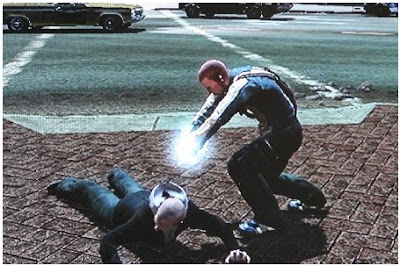
One interesting aspect of inFamous is the once-ubiquitous moral choice system; which, in this case, translates into whether you play as a Hero, healing the sick and restraining criminals to face justice or a Villain, destroying baddies and citizen alike, destroying at will and sucking fallen victims' life forces to fuel your abilities. The only way to achieve the Platinum trophy in this game requires two play throughs. Once as a hero and once as a villain.

The first time I played this I made a choice: I really wanted to be the anti-hero. I'm a Live Role-Player and the idea of playing a character totally different to myself is always highly appealing. It occurs to me that in most games, even ones like GTA where you fill the shoes of a sort of anti-hero, you still end up taking mostly moral actions. I decided that, in playing inFamous, I wanted to be a proper villain. None of this "basically good at heart but makes wrong choices nonsense" - I decided that in my mind my character had been hurt, felt used and considered himself a victim and therefore lashes out at the world around him in order to inspire fear, if he can't win respect.

Evil Cole from inFAMOUS

I bore no conscience about civilians caught in the crossfire. If I ran low on energy I would grab a passer-by to drain them of their vital energy. If there was the chance to rob somebody for rewards, rather than help them and hope for reward, I'd do it. Outside of the game's own mechanic was space for some personal expression through role-playing: fallen enemies (particiularly if they'd put up a tough fight and annoyed me) would be drained of their energy regardless of whether I needed it - it became an expression of vengeance. Being the villain was empowering, but ultimately lonely; People throw stones at you in the street, forcing you to have to live your life on the rooftops of the city, and your loved ones turn further away from you. But, as a game-play experience it was genuinely liberating and different to how most games feel.

Playing as a Hero totally changed the experience of the game. I had to modify my battle technique to avoid hurting civilians. More than that, there were similar role-playing experiences to what I had enjoyed as a villain. If I saw a sick pedestrian in the street I simply couldn't pass them by, even if I was in the middle of a chase. If I saw an injured criminals, my instinct was to use Arc Restraint (kinda like handcuffs) to hold them down to prevent them hurting anyone else. The civilians of the city rallied to my cause and even joined in the fight, assisting me by hurling rocks at the enemy, rather than me.

All in all it gives a compelling insight into the psychology of a driven humanitarian/broken vigilante or, as we more commonly name them: superhero.

What's interesting about Playfire stats, is that the majority of players choose to be a good guy. 26% of Playfire players have the platinum trophy and have therefore played both sides of the coin, so we'll discount them from our analysis. 35% of the remaining players finished the game as a Hero, while only 18% chose to finish the journey as a Villain.
Good Cole healing a civilian in inFAMOUS

The most helpful stat is for the Karma Powers upgrades. There are 15 good or evil missions that must be completed to fully upgrade a power on either side; this is an exclusive arrangement - it's not possible to fully upgrade one particular "good" power if any opposing karma mission has been completed and vice-vera. 20% of players fully upgraded their Good powers, with only 8% of the players fully upgrading their evil powers.

So, less than a third of players who chose a full single path through the game chose to play as the bad guy. I'd like to believe that in real life, most people strive to do what they think is the right thing. People make mistakes, sure or are selfish or have misguided aims which cause what it right in one person's eyes to be wrong to others; but few people specifically aim to do the villainous thing. So, given the choice within a non-threatening environment like a game, why do so few gamers choose to explore boundaries by playing a proper anti-hero?

In "Why Dark Games are Good", Andy Robertson talks about "safe spaces for dark stories" in which he addresses the issue that there is nothing wrong with exploring darkness in an environment where it has no real impact. My own experience of playing as a villain in inFamous allowed me to explore some curiosity in my mind and feel liberated from game- and role-playing habits - but, more importantly I learned that ultimately the effect of seeking to improve, rather than destroy was far more rewarding. Playing violent or dark videogames doesn't turn you to violence - but it does and should provide a environment without real consequences to explore violence and bad choices and the impact that they have.

Perhaps it would do players some good to spend a little less time trying to be the hero and take the chance to learn why they don't want to be a villain.

1. Trophies and achievements, but I'm going to stick to the one term for this (back)
2. Based on users of playfire only - therefore probably tipped toward the more "hardcore" gamer (back)

Friday, 28 January 2011

Concerning PS3 Trophies, 360 Achievements and Nintendo not joining the party

I had to confess recently to being something of a Trophy Whore.

For the uninitiated, Trophies (on the Playstation 3 - the XBox 360 equivalent is Achievements) are a ticklist of tasks which can be completed within a game. However rather than simply existing within the game itself, these awards are connected with your online profile. Even if you uninstall and sell on the game, the legacy of your actions in that game live on through your ID.


There is a great variety between titles as to the kinds of trophies offered and the skill required to achieve them (more on that later), but they typically involve awards for getting through certain parts of the game, completing the game on different skill settings, unlocking all in-game features and trying all of the game modes. Genre-dependent, other trophies are for things like winning a set number of online matches, beating a target speed-run time, getting all the women in the game to like you...

Then there are the random trophies which are even genre dependent, but based upon the title itself: I've got trophies for everything from "flipping the bird" to a cop in Mirror's Edge, performing a successful barrel roll in Wipeout HD, flying a helicopter under all the bridges in GTA IV to spending a target amount of money on courtesans in Assassin's Creed II.

Generally speaking, gaining all the trophies for a particular title will gain you the Platinum trophy on PS3 - or similar accolade on XBox.

The top trophies are meant to be an indication of real skill, but sometimes that doesn't work and the skill required to beat all challenges varies greatly from game to game. Prince of Persia - The Sands of Time (HD re-release) features a platinum trophy which can be gained in a few evening's careful play. Wipeout Fury, on the other hand, features trophies which are pretty painful. Complete 20 Zones without hitting the sides of the track? I should co-co!

My PSN card. I have a surprising number of trophies for a fitness game.


I can generally tell at a glance if I'm going to try for the platinum having taken a look at the trophies on offer. I'm currently playing Brutal Legend and I'm pretty sure the challenges offered aren't for me, heavily reliant as they are on multiplayer success: not something at which I excel these days and also a viral trophy dependent on find another player who already has it.

I didn't think I was a trophy whore for a while, because in my mind trophy whores are people who play, buy or download games specifically because they offer a cheap or easy Platinum trophy. There's something very arbitrary about playing simply to boosts one's own player score.

However I did find myself recently choosing to not bother playing a game because it didn't offer trophies. That sounds a bit trite - actually I had a choice between two games in a series and I chose the title with trophy support over the older title without. I also felt a little pang of disappointment when I realised that neither Lara Croft and the Guardian of Light or Costume Quest offered a platinum trophy for 100% completion. (especially since Lara Croft GoL presented a steeper challenge than many other games!)

It led me to wonder where my own fascination with trophies comes from. Also, having read recently that the Nintendo 3DS will not feature an achievements system I found myself disagreeing with the sentiment, feeling that the system will be somehow incomplete without this peripheral feature.

In that article, Nintendo's Bill Trinen is quoted as saying "When they create their games, [Nintendo's designers] don't tell you how to play their game in order to achieve some kind of mythical reward... Basically, the way the games are designed is they're designed for you to explore the game yourself and have this sense of discovery."

I disagree with that statement for the first reason I love achievements and trophies. I find they encourage me to attempt things in the game it would not have occurred to me to try unless someone had suggested it. That's not to say that the trophy system diminishes my sense of intelligent exploration - it just shapes it into a target to hit.

Costume Quest + Platinum: What I'd like to see

Take GTA IV for example. It doesn't take a genius to realise that one of the first things you are going to attempt when you first grab a helicopter is to fly under one of the city's bridges. That "sense of discovery" comes naturally to gamers - it's why we love the medium. However, without a pointer (and a system to keep track of progress) would I have spent a very entertaining hour or so flying around the city to try and fly under all the bridges in the game? Probably not.

Similarly, GTI Club+ offers a couple of trophies for the following: get a carwash and still win a race and win a race by turning around and reversing over the finish line. This adds a great sense of fun to the experience and really enhances the challenge available.

Done well (and we'll all played games with trophies clearly added as an afterthought) the trophies available for a game add to the game experience - they integrate with the gameplay, provide additional replay value and expand your skill with the game. Batman Arkham Asylum is a great example of Trophies implemented well. The combo achievements encourage you to raise your game in terms of melee fighting accuracy, and some of the trophies help expand side plots featuring the ridder and the Spirit of Arkham.

It is true to say that you can implement these kinds of objectives and rewards in-game. Batman Arkham Asylum would be the same game without trophies - you could simply move the achievements to an in-game menu and live without a unified achievements system.

But what is fun about the trophy system is sharing your achievements with others. If I have a friend playing the same game as me I can look at their trophy list and gauge how far along they are with a game - even provide a bit of help if they need it.

Sure there's an element of competition - but isn't it nice to be able to add a bit of friendly competition even to games with little or no multiplayer element?

Metroid Prime 3 had quite a nice idea - when you complete the game it posts a screenshot of the "game complete" screen to your message board on the Wii with a percentage of completion. Unfortunately, the Wii's message board is a bit useless and can't be navigated with ease or readily shared with friends. But I like the idea - beyond trophies or achievements - that you can take a snapshot of your experiences with a game and record them for posterity.

You only get a view like this through trying to get all the trophies

I think my love of trophies comes down to a feeling of completeness; of closure. This is purely a personality issue, but with so many games offering replay value and open worlds to explore (even after the main game is completed) I often feel that there I some games I never finished - just abandoned. Having a checklist of specific tasks to complete does at least give me a sense of closure with a game.

It's also a way of recording memories. We all play so many games and have so many experiences. If you have trophies, take a stroll down memory lane and take stock of some of the things you have achieved and experiences in the games you have played.

I'd like more games to capture memories. I'd like to be able to play back what I just did and take photo snapshots of incredible moments I witnessed, hilarious mishaps I encountered or poignant beats that spoke to me. To quote Blade Runner, "I have seen things you people would not believe ... all those moments will be lost like tear-drops in the rain."

Thursday, 13 January 2011

Time to go public

For a while now, I've been writing articles for Game People. A few of you may have seen me posting links to articles under specific games.

Game People is a games review site with a difference. It offers regulars reviews alongside 'artisan reviews.'

The artisan reviews offer a slightly different perspective on games than the usual literary criticism-style approach. There's the Haiku Gamer - whose reviews take the form of Haiku poetry. There's the Scripted Gamer, who writes and performs a short radio play to review the game. There's also the Musical Gamer, who some of you may know as the wildly successful Rebecca Mayes: Originally from Game People, latterly from The Escapist and recently spreading wings and doing her own thing.

This is about a very different way of looking at games. This is a personal response, an artistic response: a sideways look at a games content in order to judge it by merits beyond those of the "typical" gaming demographic.

Game People's regular reviews also come with a twist. Everyone has a perspective - a unique approach to how they come to the games they play. Whether they are coming from the approach of a parent, a lapsed gamer, a co-op gamer, a techie, a teenager or a board gamer - these are personal and reflective responses to the world of gaming.

How do I fit into this? Well, if everyone has a story then I have several. Sometimes the only way to communicate a point is through parable. Our world is full of stories and synonyms. I write stories, simply put.

Stories which entertain in their own right; stories which represent a personal response to a game's individual character; stories which, if nothing else, provide a break from the usual language we associate with game reviews.

Known henceforce as the Novel Gamer, my tales aim to both tell a story and make a critical point or two about the games themselves. This is complementary creativity - a sideshow to the games' own big top.

I hope you'll come with me and enjoy the journey.

My column goes live on Monday 17th January, with fortnightly stories and podcasts. Get a sneak peak at the first article here.

Friday, 29 October 2010

GameCity5 - Day Three - Old games and new faces

This morning's Guardian breakfast posed some interesting food for thought: what are the games that marked the most significant milestones in gaming history. Clearly a contentious topic and I won't go in to the list here; I think that most people, when faced with the list, would come up with alternative games that they feel are more significant for different reasons.

It rings true though, that there are certain games which simply change something in your mind about how games work or the potential for games to work. In part of today I saw a group of graduates discussion their first commercial venture, QUBE. As the game is a first-person-puzzler (for want of a better term) it draws comparison to Portal, although there appears to be no desire to add plot or implied narrative to the puzzles.

These two things coming together reminded me what is so startling about Portal. In terms of gameplay it is an extremely clever way to frame a puzzle game. What is more remarkable is the way in which a rich narrative is told without any secondary characters (apart from the voice), cutscenes or story events. As a distinction from, say, Myst - which is an adventure game with puzzles inserted - Portal is a puzzle game with a rich, hidden narrative. It's like being presented with a wordsearch in which the shape of the lines form words across consecutive pages to read "HELP ME IAM HELD PRIS ONER".

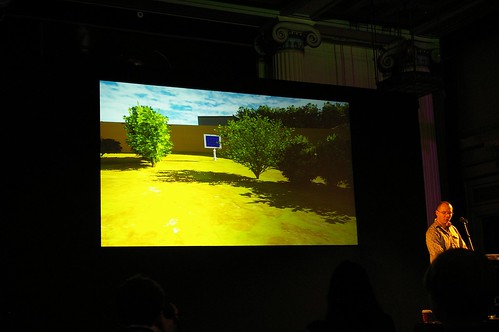
All of which mental wanderings bring me to the second of Jonathan Blow's presentations which I attended about his new game The Witness. Loved by many for creative the 2D time-shifting platform-puzzler Braid, many were, perhaps, surprised to find that his new project is set in a 3D environment with first-person controls. Chris Hecker (Spy Party) was in the position, as friend of Jonathan, to ask the inevitable cheeky question: "So what do you say to the young developers we are always telling to avoid 3D and make 2D games?"

The Witness - 01

Jonathan laughs, caught out. "We always say," he tells the audience, "the worst mistake is to make a 2D indie game ... make a decent amount of money to fund future development and then try something ambitious and obscure in 3D that no-one wants to play and lose all your money ... I'd never recommend to anyone to do what I'm doing."

But the reason for this departure is a deep love of adventure games, or a least a deep love of what adventure games should be. Speaking on the death of adventure games, Jonathan says "other games evolved to be more playable - adventure games never figured out how to do that." Frustrated by a genre which mostly revolved around hoarding inventory items, randomly combining objects and failing to interact with scenery, Jonathan has set out to make a true adventure game which combines the joy of exploration with environment based puzzles which play by a fair set of rules.

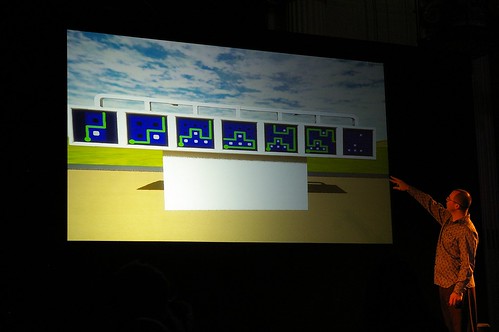
He demonstrates a good set of the opening of the game and it is clear that the player is taught how to understand the puzzles in the game a little at a time, without any text displays or audio prompts. Simple line puzzles build into basic mazes and then evolve into complex mazes with pathing rules. Basic levers are identified early as well as active and inactive switches and through an elegant opening puzzles players are taught how power lines from nearby puzzle stations to environmental objects allow passage.

The game itself was subjective to a blind playtest at Pax, without the gamers being told it was by the Braid creator. "I don't really like feedback," he causes the audience to laugh, "[the pax playtest] was more of a reality check."

There is an obvious disconnect between the puzzles and the setting. Jonathan insists that this is in keeping with the fiction of the story as well as providing a fair interface for players. "In a game like Myst each machine is disguised to go with the scenery so the player spends ages just trying to figure out how the buttons move or if its a screen or whatever."

The Witness - 11

Following this I had the honour of being invited to a presentation by some students and ex-students from Newport Uni's games design course. Having now witnessed Jonathan Blow describe twice the process of educating a player about the rules of a game it's encouraging to see that these less-experienced graduates have taken on board the same skills. The beta level for Qube (available here at the time of writing) demonstrates this same, structured, non-narrative tutorial guiding the player through the individual rules and behaviours before attempting to combine them and looks very polished indeed at this stage.

There were a range of games displayed by the students. Hannah and Harry's ColourRunners (which I talked about on Wednesday) were there again and another group of students who are turning their final year project into a commercial product. It's encouraging to hear how much support Microsoft have provided to these under-graduates, providing access to hardware and dev kits for the at-the-time unreleased Windows 7 Mobiles.

Speaking of new Microsoft hardware...

Thursday, 28 October 2010

GameCity5 - Day Two - The Big Thing

Today - for me at least - was all about Spy Party. It was no longer even Thursday anymore: it was Spy Party day.

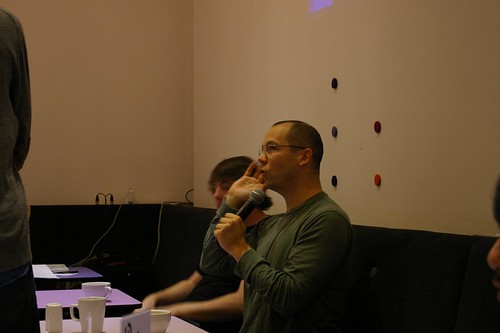
Okay, in fairness I did enjoy the Guardian Breakfast session. If there's one thing I will say about how well the GameCity days appear to be structured, it's that themes appear to tie together - I don't know if that's planned or whether the delegates and attendees subconsciously come back to common themes together. The Guardian Breakfast neatly discussed the potential for video games to mature as a medium and some discussion about the sought-after 'emotional response' to video games.

Players and indie developers seemed to be in some agreement that the more interesting responses to a game come out of emergent game-play, rather than relying on the writer of a cut-scene or the direction of plot to elicit a reaction in the same way in which film or television achieves it.

I suggested that some of the best reactions I have had to games has been down to an attachment to the characters. I cited Cannon Fodder as a case in point. Squaddies arrive with a unique name and for as long as they survive, they progress through the ranks and their skills improve. A kind of attachment is made with these figures which means that when they take an injury and begin bleeding to death a genuine dilemma is faced as to whether to relieve them of their misery. Other gamers, too, cited the naming of squads in UFO as a key part of the attachment. There is no 'writing' emotion into these attachments (much as that pains someone like me!); it is a case of providing the space in which these attachments can be formed and then providing the catalyst for a drama in microcosm.

So the theme in my head for the day was: response to games and characters on a psychological and instinctive level, rather than a utilitarian approach to characters and avatars as 'resource.' This ties in very neatly with The Big Thing, namely Spy Party.

As suggested my day pretty much ran like this, for the most part:
  • Attend Chris Hecker talk in which he introduces Spy Party
  • Go to Working Lunch to hear Chris Hecker (and others) talk about being an indie (and therefore Spy Party)
  • Queue for Spy Party hands-on alpha
  • Interview Chris Hecker about Spy Party while queueing for Spy Party
  • Play Spy Party hands-on alpha
  • Think about Spy Party
  • Go to find a toilet and then somehow get knackered trying out EA Sports Active 2
  • Think about Spy Party
An invitation to a Spy Party - 1

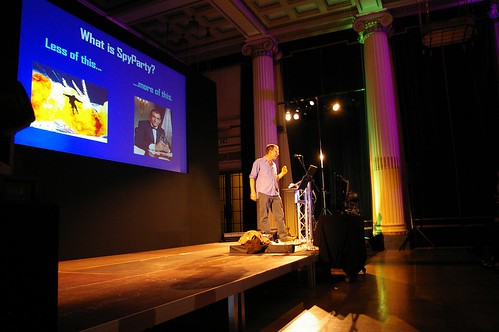
The premise which Chris Hecker gives us for Spy Party is that most games about spies revolve around shooting and action whereas culturally what we associate with spies and great spy fiction is "they're acting cool and hiding in plain sight."

He describes a game in which he wants the action and the source of the drama to revolve around players exercising "perception versus deception and performance". He first identifies what we consider to be main gamer skills as: "map navigation, aiming & shooting, micro-management and combat strategy" whereas he wants to create a game in which the player is challenged in "behaviour perception, subtle performance, playing it cool and social pattern matching."

Chris Hecker is clearly an excited evangelist of his game. Watching him speak he gives the impression that not only is he convinced he has created a game which fulfills these aims but that he is only beginning to scratch the surface of how cool these things will eventually be in the final game. "I want people with limited gaming experience but people skills to totally own traditional game players."

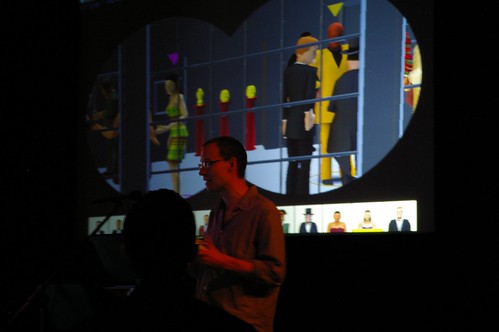
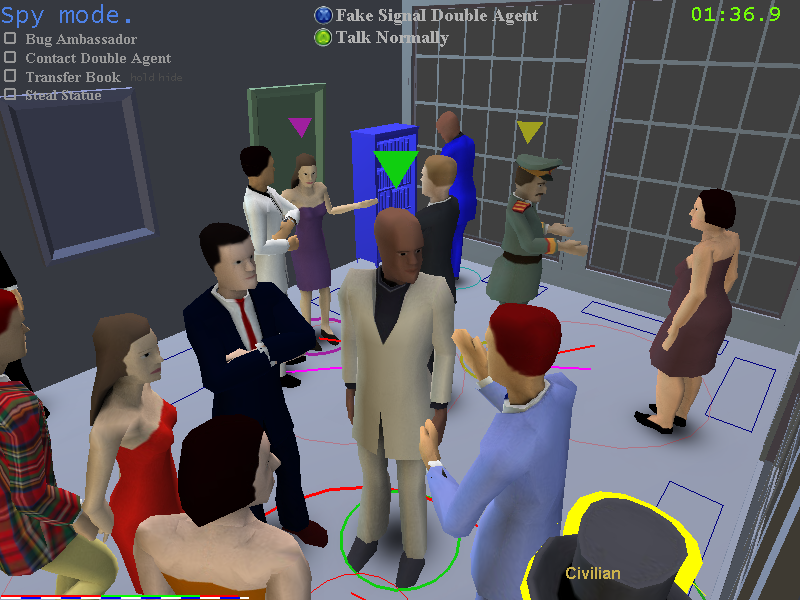
The dynamic of the game as it currently stands has one player as the spy at a party full of recognisable spy-movie characters. The player is one of these random characters and must complete a series of objectives: bug the ambassador, steal a statue, move a microfilm and signal a double agent.

The second player? Sniper. Sole aim is to identify and assassinate the other player, by identifying their behaviour in a room crowded with AI.

"Spy Party uses violence in a filmic way. It's the threat of violence, really ... used to add drama or tension to the scene." The threat of assassination, visible to the spy player as the floating laser beam of the sniper's scope not only provides the player with clues as to where the sniper is looking at that moment, but is also an ever-present reminder of failure.

An invitation to a Spy Party - 6

Hecker describes the game as a "reverse Turing test." The famous Turing is designed to see if an AI program can fool a human into thinking that they are talking to a person. In this game the model is turned on its head to see if a human player can emulate the actions of the Non-player characters.

After the session I managed to grab Chris' attention for a quick question. Given that human beings are very adept at pattern recognition and spotting human-like movements, how is it that the player's movements are not immediately distinguishable from that of the AI? "They use the same pathing," he explains. The player controls the character directly, but it moves along the same routes available to the AI.

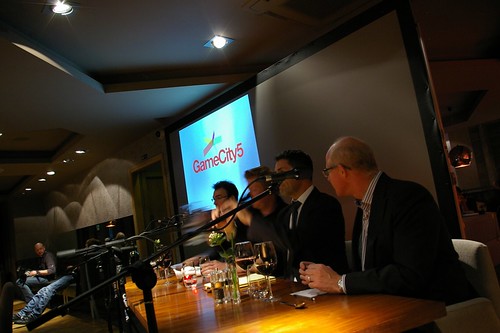
As stated, we were in familiar company for the Working Lunch discussion with Chris Hecker, among others, talking about the drive to make games from an Indie perspective.

What came across from the panel was a deep desire to make truly personal games and to have the creative freedom to hold onto a game until it has been crafted into the 'right' shape, rather than having to meet deadlines for a company.

When the afternoon came with the chance to get hands-on with Spy Party a huge queue demonstrated the massive interest this game has already generated:

SpyParty madness - 01

The queue was very painful, although the pain was lessened once in sight of the monitors as it became a real pleasure to watch players trying their hand at both the sniper and spy roles and seeing how people took to this different type of gaming.

It was a great opportunity and a real honour to be able to play the game at such an early stage, especially given how protectively indie creators can feel over their personal projects and was definitely worth the play. I confess totally to failing as both the spy and the sniper.

Big thanks to Chris Hecker for all of this and also or providing me with an interview so good I'm going to have to write a separate article once the festival is finished in order to do it justice!

Photos used courtesy of GameCity and Spy Party screenshot from developer website. Images used with big thanks and permission.

Wednesday, 27 October 2010

GameCity5 - Day One - The Braid Director's Commentary

I have to start by being completely up-front about the fact that I haven't played Braid. I had assumed it had only been released on XBox 360 and PC but in searching to read about it in advance of GameCity, I find that it is out for PSN. Oh dear.

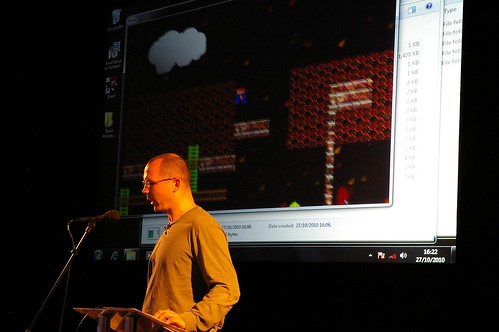
Nevertheless this session with the creator of the game, Jonathon Blow, in which he presents the game live via a project and talks the audience through elements of creating the game was absolutely fascinating and compelling from start to finish.

What is eminently clear from the presentation and the Q&A is that Jonathon is an enormously smart individual. From the way he tells it, the technology of the game was comparatively simple to put together but working out the laws of the universe in the game, how time travels through it and how this impacts upon the puzzles was of prime importance. At times, the discussion bordered on the philosophical. "There's been more focus on the text than the game design," he explains, "so I'm going to take about the design."

The assembled crowd is clearly in awe of the achievement represented by this game and the audience hangs on every word. It's clear that Jonathan is among like-minded people; there's a lovely moment where the Braid process hangs and he sheepishly calls up Task Manager to kill the process, muttering sarcastically when Windows asks if he is sure. This is followed by a knowing ripple of laughter from the audience and a recognition that even a feted indie developer is beset by the same problems as the rest of us.

I'll present some of my highlights of the presentation, because it was really great to be there and I really felt this session deserved its own blog entry:


A "Mario clone with crappy graphics"?

Jonathan started by presenting his original prototype - produced in 9 days. He described it as looking like "a Mario clone with crappy graphics" and highlighted that one of its failings was that the USP of the time-manipulation wasn't introduced until world 2, meaning that only the most enthusiastic player would make it past the initial levels to the really interesting features. This was why the final Braid would introduce the time-control from early on.

It interested me that he highlighted how quickly the player is in control. The opening title screen has the player able to move the character around and take part. Jonathan felt it was essential that the player would be straight in. This echoed, to me, what Jonathan Smith (Travellers' Tales) has said earlier about Lego Star Wars, that one of the key features was getting the players in and messing about as soon as possible - are people put off games by the layers of introduction, menus and tutorials that front so many games as standard?

He also showed how puzzles were framed, in the sense that he wanted to try and make sure all puzzle elements were on-screen at the same time and that where they were not, this was a deliberate choice. In fact, he said that with three years polishing, "everything" in the game that was present or not present was for a definite reason. (although he debunked any theories about the cloud in the final screen representing some kind of secret, saying "I just wanted a vantage point to look down on my castle".

The presenter is pleasantly candid about mistakes, pointing out sections of the game where a particular puzzle design or enemy placement did not sit well with him and that he would remove if given the chance to do the game over. Although, he defends some of the more controversial levels that he describes as "not fun" for a lot of players, saying that the "not fun" levels were kept that way for a purpose and to provide the game with depth and make it a more complete experience.

And how does a game like this get created? There's a clue when Jonathan is asked "at what point did you know you were committing to the game for three years" and he answers "I didn't ... honestly two years in I was convinced i was always 6 weeks away from completion." As each new element got refined and improved it provided inspiration for new ideas and possibilities and the game kept growing. Many game elements came from studying the code itself, for example time-insensitive objects.

In conclusion...

The opening day of GameCity 5 was, for me, packed with content, interesting discussions and chances to meet people as enthusiastic about games as me.

Now it's late. My writing is probably deteriorating by the word and I shall be doing it all again tomorrow. See you then!

Photo used courtesy of GameCity with thanks

GameCity5 - Day One - Working Lunch and Remakes

Sadly events took a turn for the confusing and frustrating. I arrived at the Tonic venue for a session entitled "Who should save video games?" This was to be a debate around if and how we should preserve gaming's heritage, in the face of changing technology, quickly obsolescent hardware and games makers with neither the time nor the remit to store cultural product for future generations of historians.

However before I could get into the venue I was blocked by door stewards who had a clipboard full of names. It turns out that the session required a sign-up beforehand. There were probably about 10 or 15 of us outside who were a little bemused, as the website had not indicated that any kind of sign-up was required.

This reared its head again at the Braid discussion, although this time I found (much to my bemusement) that I was actually on the sign-up sheet, despite having had no memory of doing so.

It turns out that the 'my event' part of the GameCity website was in fact being used to create attendance lists for the venues. Most users seem to think that this was simply a Web 2.0-style calendar app to help attendees plan their day but it seems it is actually being used to determine numbers. However, people signing up on the website and adding events to a calendar is certainly no guarantee they are actually planning on attending GameCity, let alone a specific event. Surely enough, when only about 20 of the people on the stewards' check-sheet actually turned up for the discussion the rest of the stragglers were let in.

This was a minor flaw in the organisation of what was otherwise a very well co-ordinated day.

Anyway a good discussion was had around the issue of archiving and preserving with an excellent panel:

Who Should Save Videogames? - 04
From left: Jonathan Smith - Travellers' Tales/Time Warner, Tom Woolly - National Media Museum, Spencer Neal - New Statesman, Michael Rawlinson - UKIE

If I'm honest my opinion got a little turned around as a result of the debate. I've always been a strong advocate that games from the past should be emulated on current formats so that the history of gaming is always accessible, in the same way that if I want to watch a film from 1926 there is nothing stopping me, as long as the film has been transferred to a modern format.

However the debate really brought to my mind the fact that gaming has come from such a basic infancy that many of the games we used to play are simply not valid for a modern audience. James, from the National Media Museum, pointed out that what is more interesting is to try and capture the experiences of the players who were there at the time.

This struck a chord with me as I am aware that many old films really mean little to a modern audience without first gaining some knowledge of the context of the film. In the same way my own experiences with "retro" gaming have been mixed. Games I used to play I can re-play with a certain fondness, although I am often surprised at how frustrating the experience is; old games with which I have no nostalgia actually provide very little as a result of playing them myself.

There was a consensus (well, totally majority) in the room that the public purse should be funding an organisation to maintain gaming's cultural history, in the same way that the British Museum legally requires a copy of every published print work to be delivered to them for storage. Having said that, given that the room was populated by either gamers, industry figures and anyone else interested in the subject it's probably not a representative cut of the population, but still...

Problematically, this raises a whole raft of questions around what should be archived and how it should be stored. I did ask the panel whether they though the current generation of games posed more of a problem than older games as so much of today's content requires online activation, patches. And what of World of Warcraft? With so much of the experience based around the user experience of a multi-million player community?

Ultimately more questions posed than answered, I think and certainly this is a topic which requires an article all of its own, so for now I will move on.

After a brief chat with the panel afterwards, including a great chance to chinwag with Jonathan Smith from Travellers' Tales (who I learned was sadly not at the company during its Leander days). Following this session he took up residence in one of the pods and encouraged a couple of gamers to play through the PS2 version of Lego Star Wars II, using it as an opportunity to highlight some differences between how games were made - even 5 years ago - compared to today (I confess I hadn't even noticed that Language-selection screens had disappeared from games!). Really nice to get to spend a bit of time chatting to a thoroughly nice chap from a company that makes decent games. At least I didn't have to be diplomatic about their output...

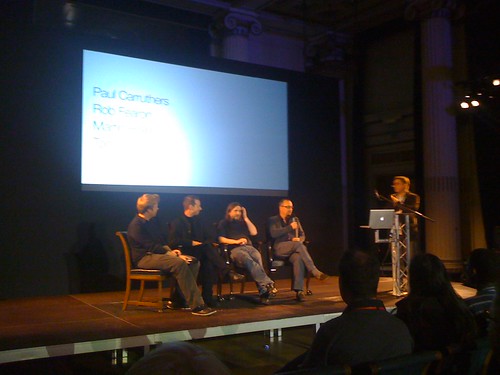
Following this I headed into the beautifully ornate Council House for a discussion about the re-making of games. With Martin Hollis, creator of the original Goldeneye, on the panel it was inevitable that a certain amount of time was going to be given over to that topic but other things were covered, too. The other members of the panel were Paul Carruthers (creator of Archipeligos on the Amiga!), Rob Fearon from Retro Remakes and Tom Woolley from the National Media Museum.

The most interesting aspect of the discussion, for me at least, was that it gave a real and rare insight into the attachments that game creators feel for their work. In the modern marketplace we expect game producers to view their work as so much product or ephemeral projects. It's refreshing, then, to hear Paul Carruthers describe the experience of discovering that one's own work has been 'remade' without his knowledge as "weird... I felt like I'd been burgled". Tom Hollis agreed and said "if you create something [artistic] you feel you have a right to control it forever and ever".

Carruthers. Fearon. Hollis. Woolley.

In spite of all this there was a general feeling that the panel wish re-makers the best of luck with their projects, although they did express that, given the ease of contacting industry figures via the Internet, it is at least polite to contact the originators and ask for permission.

As for the Goldeneye remake, Tom Hollis is only too aware of the mountain to be climbed and the weight of expectation fans and those who have heard the legends surrounding the original will bring to bear. Tom was asked if he had wanted to be involved in the remake: "Actually I've been asked to be involved and it's a tough project - I'm not really up for it!"

All pictures in this post courtesy of GameCity with thanks

GameCity5 - Day One - Guardian Breakfast and The GameCity Lounge

And so it came to pass that I arrived not only to GameCity, but also Nottingham for the first time.

IMGP7528

I shall use this as my primary excuse for missing most of the first session I had intended to join - Guardian Breakfast. It was shame to come into this late as there seemed to be some reasonable topics being proposed by the compere and the assembled crowd either had little to offer or were nervous speaking out loud in public.

It was tricky from this to "gauge the temperature" of the gathered representative's of society's gamers. It was particularly interesting that when the question was posed "who has had any stand-out moments in gaming the last 12 months?" there was very little response and almost as little to the question "which games are you particularly looking forward to in the next few months." I wasn't sure whether to be worried about the state of gaming that there was so little affecting the most core group of players. As I say, perhaps it was that most people were a little nervous to speak out on the first morning (or maybe didn't want to admit in front of the hardcore that their most anticipated game is Pokepark Wii:Pikachu's Adventure).

Guardian Breakfast - Wednesday - 4

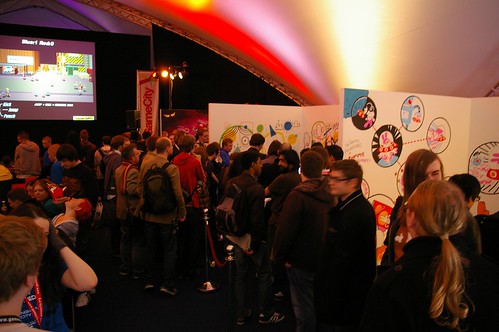
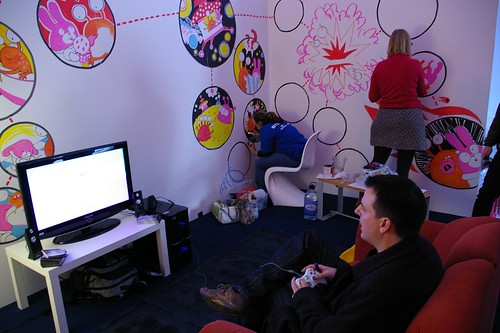
Still, having got my bearings - and had a cup of tea - I headed off into the unfamiliar streets to find the GameCity lounge. Sadly, without camera on this first day I cannot share with you the GameCity tent, but suffice it to say there is a gleaming Bedouin palace in which the GameCity organisers have gathered gaming pods, a huge screen, music and a colouring-in and writing table for Saltsman's Ideas Bucket: from which videogame creator Adam Saltsman and musician Rebecca Mayes will attempt to craft a game during Friday's event.

The games being played on the big screen had two things in common: chaos and carnage. I managed to get in a few games of Sky Kids - A 25 player air race to the finish. It took most new players the first two rounds to figure out which avatar they were controlling and then a further few rounds to fathom the controls. Once this phase had passed I applied myself and managed to climb the scoreboard, finally reaching 1st place and then deciding to retire as champion in my own consideration!

There were a number of indie and university graduate games on display. Here are some of the highlights with which I managed to get hands-on:

Lounges - Wednesday - 02
Yours truly snapped while trying out ColourRunners

ColourRunners (this is the best link I can find) is an inventive final-year games design course project by Hannah Payne and Harry Corr. The game requires the player to traverse a monochrome town, able to walk only on painted surfaces . The player paints their own path in search of hidden 'tags'. Visually the stark monochrome aesthetic and clean building lines are reminiscent of Mirror's Edge. Hannah told me "we wanted to do something simple with lots of visual feedback." I did try to talk to Hannah and Harry about how it reminded me of Wizball on the Speccy, but when I saw their blank, young, young, young faces I realised this was probably not a reference that would get me far. The game is very attractive looking indeed and I think could find an audience among players, if developed, although in its current form the lack of distinctive colour means that the opening scene showing the locations of the markers for the hidden tags is largely unhelpful once the player is on the ground and searching for familiar landmarks.

I also spoke to Ben Bradley, creator of Substream. The game is a 3d flying shooter with a couple of nice twists. The first is that the whole game world is repeated to the left and right of the player, meaning that some enemies can only be destroyed by attacking a parallel version of itself to the left or right of the player, creating some interesting strategies in the game-play. The second is a relationship between the shooting action and the soundtrack. Although this was difficult to hear in the noisy atmosphere of the GameCity Lounge, Ben spoke of his enthusiasm for the games relationship between the atmosphere and setting and the soundtrack. The final version is said to contain all kinds of tracks even venturing into Tango territory...

I also managed to get a brief hands-on of Avoid, to be the first game from small games developer Nerf Games. This is closest to capture the flag taken to its most pure form. 4 players each try to avoid floating squares on a colourful geometric grid. When a shining white light appears, each player must try to grab the object and bring it back to their goal. General feedback was that some form of tackling move is really needed and the guys from Nerf Games were all on hand, enthusiastically taking on board all comments and promising to look into the suggestions made. It's a game that's great fun with 4 players on screen - sadly I didn't get the chance to try it with less players, such was the popularity of the game at the time.

I also managed to have a look at Lego Universe but didn't get much time with it. I'm hoping to get a second look because my first impression was that the game compared very poorly to the excellent standard of platform games produced by Travellers' Tales. This is being produced by an entirely different company and is being pitched as a Lego-based MMO for young players. Graphically, however, it seems to bear a heritage more akin to Playstation Home and the controls were awkward - although it could be that I am less familiar with claw-shaping my hand around a PC keyboard for gaming these days. The game has been clearly designed with protection of young minds as a foremost concern. Player names are chosen from a pre-defined menu and the chat window restricts the player to a predefined dictionary of words. One player next to me was unable to explain that he was playing at Game City because "City" was not in the allowed words list. Sadly then I shall not be able to discuss my experiences in Scribblenauts of dressing the player in stockings, handcuffs and a blindfold. *sigh*

All pictures in this post courtesy of GameCity with thanks